
High protein banana bread sounds like the kind of recipe that should require a compromise: more protein, less pleasure. In practice, it does not have to. The best versions still taste like banana bread first and a “protein recipe” second.
The trick is not simply adding more protein powder. That is where many recipes go wrong. Protein powder absorbs liquid differently from flour, eggs change the structure of the crumb, and Greek yogurt or cottage cheese can add moisture while quietly increasing the protein content. Get that balance right and you can make a loaf that is soft in the center, deeply banana-flavored, lightly sweet, and sturdy enough to slice for breakfast or a grab-and-go snack.
This high protein banana bread recipe is built around that idea. It uses very ripe bananas for sweetness and moisture, Greek yogurt and cottage cheese for a softer crumb, eggs for structure, and a moderate amount of protein powder rather than trying to turn the loaf into a baked protein shake.
Quick answer: Yes, you can make banana bread high in protein without making it dry or rubbery. The most reliable approach is to combine several protein sources, keep enough flour and moisture in the batter, mix gently, and bake until the center is fully set. For this recipe, expect roughly 11–13 grams of protein per slice when the loaf is cut into 8 slices, although the exact amount depends on the protein powder and dairy products you use.
High Protein Banana Bread at a Glance
- Recipe type: Quick bread
- Best for: Breakfast, meal prep, snacks and post-workout eating
- Yield: 1 standard 9 x 5-inch loaf
- Servings: 8 generous slices
- Prep time: 15 minutes
- Bake time: 50–60 minutes
- Oven temperature: 350°F (175°C)
- Texture: Moist, tender and slightly dense, but not gummy
- Protein: Approximately 11–13 grams per slice, depending on ingredients
- Storage: Up to 3 days at room temperature or about 5–7 days refrigerated
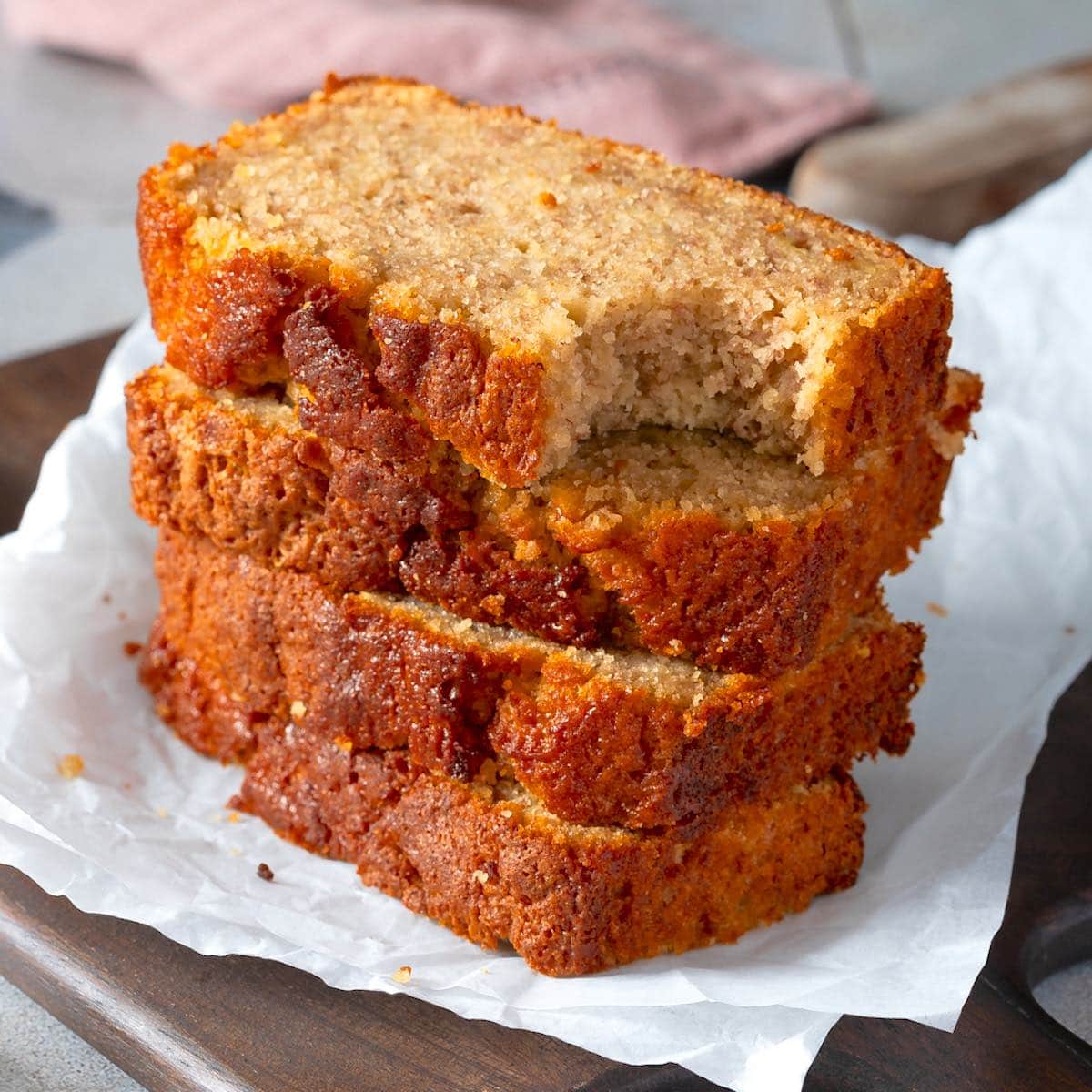
Why This High Protein Banana Bread Recipe Works
The most important idea in this recipe is protein balance. A common mistake is to treat protein powder as though it behaves exactly like flour. It does not.
Flour supplies starch and, when wheat flour is used, gluten-forming proteins that help give a quick bread its structure. Protein powders can absorb liquid aggressively, while dairy ingredients such as Greek yogurt and cottage cheese bring both protein and moisture. Eggs add protein, fat, emulsifying power and structure.
That means a better high protein loaf is built from several ingredients working together rather than from an enormous amount of protein powder.
There is also a useful practical rule: if the batter becomes dramatically thicker than ordinary banana bread batter after you add protein powder, the finished loaf is unlikely to become softer in the oven. It usually becomes drier.
That is why this recipe deliberately keeps the protein powder moderate and lets bananas, yogurt and cottage cheese carry much of the moisture load.
What Makes a Banana Bread Actually “High Protein”?
There is no single protein threshold that officially defines a food as “high protein” for every recipe or serving size. In everyday recipe language, the term generally means that a familiar food has been reformulated to provide substantially more protein than its conventional version.
A standard slice of banana bread can contain only a few grams of protein. A protein-focused version can move that number into the low double digits by combining eggs, Greek yogurt, cottage cheese, protein powder, nuts or seeds.
That distinction matters because the goal should not be to maximize the number at any cost. A banana bread containing enormous amounts of protein powder may technically have more protein, but if the loaf is dry and unpleasant, it has failed the more important test: whether people will actually want to eat it.
The Best Ingredients for High Protein Banana Bread
Very Ripe Bananas
Use bananas that are heavily speckled, very soft and naturally sweet. As bananas ripen, their texture softens and their starches are converted into simpler sugars. That makes ripe bananas particularly useful in a loaf where you want moisture and sweetness without relying entirely on added sugar.
Three medium bananas are ideal for this recipe. If your bananas are unusually large, weigh or measure the mashed fruit rather than adding the entire amount blindly. About 1 1/2 cups of mashed banana is a good target.
Greek Yogurt
Plain Greek yogurt adds protein and moisture while contributing a mild tang that keeps the loaf from tasting overly sweet. Full-fat, low-fat and nonfat Greek yogurt can all work, although the final richness will vary.
If your yogurt is extremely thick, the batter may need a small splash of milk. The goal is a thick but spoonable batter, not dough.
Cottage Cheese
Cottage cheese has become one of the most useful ingredients in high protein baking because it can add a meaningful amount of protein without requiring a large quantity of protein powder.
For a smooth banana bread, blend the cottage cheese before adding it to the wet ingredients. This removes the curds and creates a creamy mixture that disappears into the batter.
If you do not have a blender, you can whisk it thoroughly, but the finished bread may contain tiny pockets of cottage cheese.
Protein Powder
Vanilla protein powder is the easiest choice for this recipe. Whey, whey-casein blends and many plant-based blends can work, but they do not absorb liquid identically.
Do not automatically add extra scoops because you want more protein. Increasing the powder without changing the rest of the recipe can make the loaf dry, chalky or rubbery.
If you use a plant-based protein powder, keep a tablespoon or two of milk nearby. Some plant proteins absorb significantly more liquid than others.
Eggs
Eggs contribute protein, structure and richness. They also help the loaf hold together when some of the flour is replaced with protein powder.
All-Purpose Flour
All-purpose flour provides the structural foundation that protein powder cannot fully replace. You can experiment with whole-wheat or oat flour, but replacing too much of the wheat flour can make the loaf heavier and more fragile.
Brown Sugar
You do not need a large amount of added sugar because very ripe bananas and flavored protein powder already contribute sweetness. A modest amount of brown sugar gives the loaf a deeper flavor and helps maintain a soft texture.
Butter or Neutral Oil
A small amount of fat makes a noticeable difference in texture. It softens the crumb and prevents the loaf from tasting dry, particularly after refrigeration.
Cinnamon, Vanilla and Salt
These ingredients are small but important. Cinnamon amplifies the banana flavor, vanilla rounds out the sweetness, and salt prevents the loaf from tasting flat.
The Complete High Protein Banana Bread Recipe
Ingredients
| Ingredient | Amount | Why It Is Used |
|---|---|---|
| Very ripe bananas, mashed | 3 medium, about 1 1/2 cups | Natural sweetness, moisture and banana flavor |
| Large eggs | 2 | Structure, richness and protein |
| Plain Greek yogurt | 1/2 cup | Moisture and protein |
| Blended cottage cheese | 1/2 cup | Additional protein and moisture |
| Melted butter or neutral oil | 2 tablespoons | Tenderness |
| Brown sugar | 1/4 cup | Sweetness and moisture |
| Vanilla extract | 1 teaspoon | Flavor |
| All-purpose flour | 1 cup | Structure |
| Vanilla protein powder | 1/2 cup | Protein boost |
| Baking soda | 1 teaspoon | Leavening |
| Ground cinnamon | 1/2 teaspoon | Warm spice flavor |
| Fine salt | 1/4 teaspoon | Flavor balance |
| Milk, only if needed | 1–2 tablespoons | Adjusts batter consistency |
| Chopped walnuts or dark chocolate chips, optional | 1/3 cup | Texture and flavor |
Step 1: Prepare the Oven and Pan
Heat the oven to 350°F (175°C). Lightly grease a 9 x 5-inch loaf pan and line it with parchment paper, leaving enough paper hanging over the long sides to lift the finished loaf out easily.
Do not skip the parchment if you are making the loaf for meal prep. Protein-rich banana bread can be slightly more delicate while warm than a conventional loaf.
Step 2: Blend the Cottage Cheese
Blend the cottage cheese until smooth. This takes only a few seconds and gives the finished bread a much cleaner texture.
Step 3: Mash the Bananas
Place the bananas in a large bowl and mash them with a fork until mostly smooth. A few small pieces are desirable because they create little pockets of banana flavor throughout the loaf.
Step 4: Build the Wet Mixture
Add the eggs, Greek yogurt, blended cottage cheese, melted butter or oil, brown sugar and vanilla. Whisk until the mixture is evenly combined.
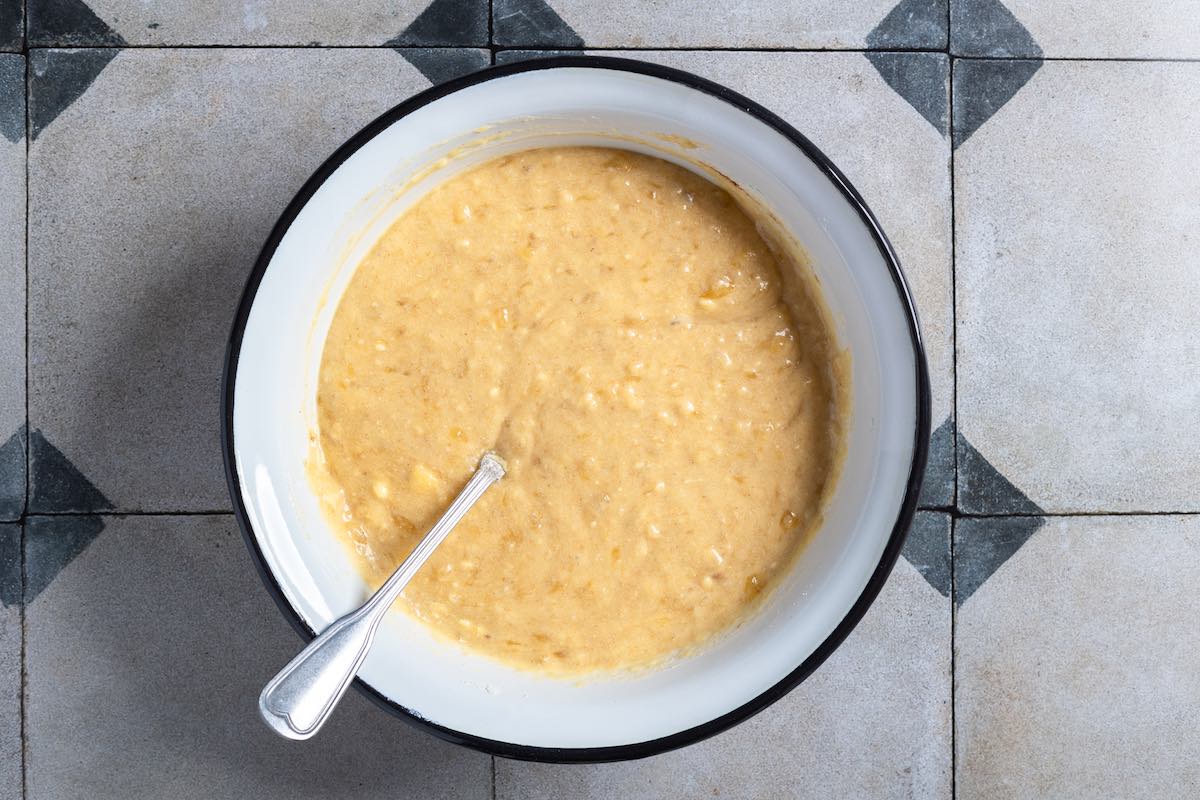
At this stage, the mixture should look creamy and fairly loose. That moisture is important because the protein powder will thicken the batter later.
Step 5: Mix the Dry Ingredients
In a separate bowl, whisk together the flour, protein powder, baking soda, cinnamon and salt.
Mixing the dry ingredients separately distributes the leavener and protein powder more evenly and reduces the chance of concentrated pockets of baking soda.
Step 6: Combine Gently
Add the dry ingredients to the wet mixture and fold with a spatula just until the flour disappears.
Do not beat the batter. A few small lumps are completely acceptable. Overmixing develops gluten and can produce a noticeably tighter crumb.
If the batter is so thick that your spatula struggles to fold it, add 1 tablespoon of milk. Add a second tablespoon only if necessary.
Step 7: Add Optional Mix-Ins
Fold in chopped walnuts, pecans or dark chocolate chips if desired. Keep the amount moderate so the loaf remains structurally sound.
Step 8: Bake
Transfer the batter to the prepared pan and smooth the top.
Bake for approximately 50–60 minutes. Start checking around the 50-minute mark because oven temperatures and banana size vary.
If the top becomes deeply browned while the center still appears undercooked, loosely tent the loaf with foil for the remaining baking time.
Step 9: Check the Center
Insert a toothpick or thin skewer into the center. It should emerge clean or with a few moist crumbs attached. Wet batter means the loaf needs more time.
Do not judge the loaf entirely by its crust. Protein-rich banana bread can brown substantially before the center has finished setting.
Step 10: Cool Before Cutting
Let the loaf cool in the pan for about 15–20 minutes. Transfer it to a wire rack and allow it to cool completely before slicing.
This is one of the most overlooked steps in protein banana bread. The interior continues to set as it cools. Cutting the loaf while it is piping hot can make a perfectly baked loaf appear gummy.
How Much Protein Is in a Slice?
The exact nutrition depends heavily on the brand of protein powder, the Greek yogurt, cottage cheese and the size of your bananas. That is why a precise number should not be copied from one recipe to another.
For this recipe, an 8-slice loaf will generally provide approximately 11–13 grams of protein per slice when a conventional protein powder containing around 20–25 grams of protein per serving is used.
Cutting the same loaf into 10 thinner slices will reduce the protein per serving, while adding walnuts or a higher-protein powder can increase it.
For the most accurate nutrition information, enter the exact brands and quantities you use into a nutrition calculator or food database. The USDA FoodData Central database is a useful starting point for individual ingredients.
Is High Protein Banana Bread Good After a Workout?
It can be a convenient post-workout food, but it should not be treated as a magical recovery product.
Protein helps provide amino acids needed for muscle repair and maintenance. The National Institutes of Health notes that athletes generally need more protein than less-active adults, with commonly cited ranges around 0.5–0.9 grams per pound of body weight per day. The exact requirement depends on the person and the training situation.
A slice of protein banana bread can therefore be useful when it helps you reach an appropriate daily protein intake. It can also provide carbohydrates from bananas and flour, which may be useful around exercise.
But timing is not everything. Current sports-nutrition guidance does not support the idea that there is one tiny post-workout “anabolic window” during which protein suddenly becomes useful and then stops being useful. Total daily intake and the overall quality of the diet matter substantially.
For athletes or people doing regular resistance training, protein requirements are often higher than the basic adult recommendation. Individual needs vary, so people with medical conditions or specialized dietary requirements should get personalized advice from a qualified healthcare professional.
The Protein Powder Problem: More Is Not Always Better
If you want to increase the protein content of this recipe, the obvious move is to add another scoop of protein powder. It is also the move most likely to damage the texture.
Protein powder is not a one-for-one replacement for flour. Flour provides starch and structural properties that protein powder does not replicate. As protein powder increases, the batter can become thicker and the baked loaf can lose tenderness.
A better strategy is to build protein through several ingredients:
- Greek yogurt
- Cottage cheese
- Eggs
- Protein powder
- Nuts or seeds
- Nut butter, when appropriate
This creates what can be thought of as a protein ladder: instead of asking one ingredient to do all the work, you spread the protein contribution across the recipe.
Whey vs. Plant Protein for Banana Bread
Whey Protein
Whey generally works well when you want a relatively light, familiar baked texture. It can, however, become drying when used aggressively.
Casein
Casein tends to produce a thicker batter and can give baked goods a denser texture. It can work particularly well when the recipe contains plenty of moisture.
Plant Protein
Pea, soy, rice and blended plant proteins can all work, but the results vary significantly between brands. Some plant powders are gritty or absorb a lot of liquid.
If using plant protein, judge the batter rather than following the powder quantity blindly. The finished batter should remain thick and scoopable, not stiff enough to resemble cookie dough.
How to Make High Protein Banana Bread Without Protein Powder
Yes, you can.
If you prefer not to use protein powder, replace it with additional flour and rely on Greek yogurt, cottage cheese, eggs and optional nuts or seeds for the protein boost.
The result will not contain as much protein as a version made with protein powder, but it can still be considerably more protein-rich than a conventional banana bread.
This approach is particularly useful for people who dislike the taste of protein powder or simply want a recipe based primarily on ordinary grocery-store ingredients.
How to Make It Moist Without Adding More Sugar
Moisture and sweetness are related in banana bread, but they are not the same thing.
You can keep a loaf moist without turning it into a sugar-heavy dessert by using very ripe bananas, Greek yogurt, cottage cheese and a modest amount of fat.
Another important technique is avoiding overbaking. Five or ten extra minutes in the oven can make a noticeable difference in a protein-rich loaf because the crumb continues to firm as it cools.
Why Your Protein Banana Bread Is Dry
Too much protein powder: This is the first thing to investigate. Reduce the powder rather than immediately adding more liquid.
Not enough ripe banana: If the recipe calls for 1 1/2 cups and you use substantially less, the moisture balance changes.
Overbaking: A loaf can be technically safe and fully cooked but still drier than it needs to be.
Very absorbent protein powder: Different powders behave differently. Plant-based powders can be especially variable.
Too little fat: Removing all fat can make a protein loaf feel noticeably leaner and drier.
Why Your Banana Bread Is Gummy
Gummy banana bread usually comes down to one of four issues: underbaking, slicing too early, excessive moisture or overmixing.
First, check the center with a toothpick. Second, cool the loaf completely. Third, measure your bananas rather than relying only on the number of bananas. Fourth, stop mixing as soon as the dry ingredients disappear.
Protein powder can make this problem more confusing because the outside of the loaf may look finished while the center remains soft.
Why Did My Protein Banana Bread Not Rise?
Protein powder does not provide the same structural support as wheat flour. If you replace too much flour with protein powder, the loaf may naturally be shorter and denser.
Fresh baking soda also matters. Old or poorly stored leavening agents can lose effectiveness.
Finally, avoid opening the oven repeatedly during the first part of baking. Large temperature swings can interfere with the loaf's rise and setting.
How to Make a Lower-Sugar Protein Banana Bread
Start by reducing the brown sugar rather than removing every source of sweetness at once.
Very ripe bananas are naturally sweet, and flavored protein powders may contain additional sweeteners. Reducing the added sugar by 25–50% can work depending on the protein powder you use.
If you eliminate too much sugar while also reducing fat, the loaf may become less tender. The goal is not simply “less sugar”; it is a balanced batter.
How to Make Chocolate Protein Banana Bread
Replace part of the vanilla protein powder with chocolate protein powder and add 1–2 tablespoons of unsweetened cocoa powder.
Because cocoa powder and some chocolate protein powders absorb liquid, watch the batter carefully. If it becomes unusually stiff, add a tablespoon of milk.
Dark chocolate chips are optional, but a small amount can make a lower-sugar loaf taste considerably more indulgent.
How to Make a Gluten-Free Version
Use a reliable 1-to-1 gluten-free baking flour designed to replace wheat flour in baking.
Do not assume that every gluten-free flour behaves identically. Some blends contain starches and gums that change how quickly the batter thickens.
Oat flour can also work, but it usually creates a softer, somewhat denser crumb than all-purpose flour.
How to Make Vegan High Protein Banana Bread
For a vegan version, use a plant-based protein powder and replace the dairy ingredients with unsweetened soy or another suitable dairy-free yogurt. Replace the eggs with a suitable egg substitute such as flax eggs.
Because egg-free and dairy-free batters have different structural properties, expect the loaf to be slightly denser. Let it cool completely before slicing.
Can You Turn This Recipe Into Protein Banana Muffins?
Yes. Divide the batter among a lined 12-cup muffin pan and begin checking the muffins after about 18 minutes.
They are done when the tops are set and a toothpick inserted into the center comes out with a few moist crumbs rather than wet batter.
Muffins are particularly useful for meal prep because you can portion the loaf before freezing instead of having to slice a whole frozen loaf later.
The Best Way to Store High Protein Banana Bread
At Room Temperature
Store the cooled loaf in an airtight container for up to about 2–3 days. If your kitchen is very warm or humid, refrigeration is a better option.
In the Refrigerator
Keep the loaf tightly wrapped or in an airtight container for approximately 5–7 days. Because this recipe contains yogurt and cottage cheese, refrigeration is the more conservative storage choice.
In the Freezer
Slice the completely cooled loaf before freezing. Wrap individual slices in parchment or freezer-safe wrapping and place them in a sealed freezer bag or container.
For best texture, use the frozen slices within about 3 months. Thaw at room temperature or warm gently in a toaster oven or microwave.
Meal-Prep Strategy: Make the Loaf Work Harder
The real advantage of high protein banana bread is not that banana bread suddenly becomes a complete meal. Its advantage is convenience.
Slice the loaf into equal portions after it has cooled completely. Store several slices in the refrigerator and freeze the rest.
For a more substantial breakfast, pair one slice with Greek yogurt, berries, eggs or another protein-rich food. For a snack, a slice can be combined with fruit and a glass of milk.
This approach is more useful than trying to force every nutritional need into the banana bread itself.
Can High Protein Banana Bread Help With Weight Loss?
It can fit into a weight-loss diet, but the word “protein” does not automatically make a food low-calorie or weight-loss friendly.
Calories still matter. A loaf made with large quantities of nut butter, chocolate chips, oil and sweetened protein powder can be calorie-dense even when its protein content is impressive.
The useful advantage of protein is that it can help make a snack or meal more satisfying, which may make it easier for some people to manage overall food intake. But the recipe should be judged as part of the entire diet rather than as a special weight-loss food.
A Better Way to Think About “Healthy” Banana Bread
The modern internet has created a strange expectation that every familiar food must be redesigned to eliminate something: sugar, fat, carbohydrates, gluten or calories.
That is not necessarily the best way to improve a recipe.
A smarter approach is to decide what you actually want the food to do. If your goal is more protein, increase protein without destroying texture. If your goal is less added sugar, use ripe bananas and reduce the added sweetener. If your goal is more fiber, change part of the flour or add nuts and seeds.
The recipe becomes healthier because it fits a specific nutritional goal—not because every traditional ingredient has been removed.
Banana Bread Has Always Been a Recipe for Reinvention
Banana bread's history makes its modern protein makeover more interesting.
The familiar American version became widespread during the 1930s, when overripe bananas were increasingly used in quick breads and chemical leaveners such as baking powder and baking soda became widely available. Historical accounts also show that early recipes were not identical to the rich, dessert-like loaves common today. Some used inexpensive ingredients such as wheat bran to stretch the mixture.
King Arthur Baking's historical review of banana bread recipes shows how dramatically the loaf changed from decade to decade while keeping its basic identity. That makes today's high protein version less of a culinary betrayal than it might seem. Banana bread has always adapted to the ingredients, economics and priorities of the people baking it.
Today the priority may simply be different: people want the comfort of a familiar loaf while making it easier to fit into a protein-conscious diet.
Frequently Asked Questions About High Protein Banana Bread
What is the best protein powder for banana bread?
Vanilla whey protein is a strong starting point because its flavor works naturally with banana and its texture can be relatively light. Casein and plant-based blends can also work, but they may require more attention to batter consistency.
How much protein is in high protein banana bread?
It depends on the recipe and serving size. This recipe provides approximately 11–13 grams of protein per large slice when divided into 8 portions, but the exact amount changes with the protein powder, yogurt and cottage cheese brands.
Can I use Greek yogurt instead of cottage cheese?
Yes. The loaf will still work, although replacing cottage cheese with yogurt may reduce the total protein depending on the products used.
Can I use only protein powder and no Greek yogurt?
You can, but the texture may become drier. Greek yogurt provides moisture as well as protein, which is particularly useful when protein powder is present.
Why does my protein banana bread taste like protein powder?
The most common reason is simply using too much powder. Strongly flavored powders can also dominate delicate banana flavor. Use a moderate amount and let ripe bananas, vanilla and cinnamon remain prominent.
Can I use frozen bananas?
Yes. Thaw them completely before measuring. If they release a large amount of watery liquid, drain some of it so you do not unintentionally increase the moisture in the batter.
Can I make protein banana bread without eggs?
Yes. Use an appropriate egg substitute such as flax eggs. Expect a somewhat denser crumb because eggs contribute both structure and emulsification.
Can I make this recipe with oat flour?
Yes. Oat flour can replace some or all of the all-purpose flour, but the loaf may be softer and denser. Watch the batter consistency and avoid overbaking.
How do I know when protein banana bread is done?
Insert a toothpick into the center. It should come out clean or with a few moist crumbs, not wet batter. The loaf should also feel set in the middle rather than liquid or unstable.
Why is my banana bread wet in the middle?
It may be underbaked, contain too much banana or liquid, or have been sliced before cooling. Bake until the center is set and allow the loaf to cool completely before judging its texture.
Can I freeze protein banana bread?
Yes. Slice the cooled loaf, wrap the portions individually and freeze them in an airtight container or freezer bag. For best quality, use within about 3 months.
Is protein banana bread healthy?
It can be a nutritious option, particularly when it helps increase protein intake without excessive added sugar. However, “high protein” does not automatically mean low-calorie or appropriate for every diet. Portion size and the rest of the day's nutrition still matter.
Is protein banana bread good for muscle gain?
It can contribute useful protein and calories to a muscle-building diet, but one food does not build muscle by itself. Adequate total protein, sufficient energy, resistance training and recovery all matter.
Final Verdict
The best high protein banana bread is not the loaf with the highest number printed on a nutrition label. It is the loaf that gives you a meaningful protein boost while remaining good enough to make again.
That means keeping the protein powder under control, using very ripe bananas, building moisture into the batter with Greek yogurt and cottage cheese, and resisting the temptation to overmix or overbake.
The result is a practical middle ground: a familiar banana bread with a more useful protein profile, enough sweetness to feel like a treat, and a texture that does not announce that it has been “healthified.”
And perhaps that is the most useful lesson from the recipe. Banana bread has never been a fixed formula. From Depression-era kitchens trying not to waste food to modern kitchens trying to make everyday snacks more protein-rich, the loaf has always changed with the needs of the people baking it.
If you want a high protein banana bread that you will actually look forward to eating, start with texture—not the protein number. Get the crumb right first, then optimize the macros.
