
Quick answer: This high-protein banana bread uses very ripe bananas, Greek yogurt, eggs, and whey protein to create a soft, moist loaf with roughly 12 to 13 grams of protein per thick slice when cut into 8 servings. The key is not simply adding more protein powder. It is balancing the protein with enough banana, dairy, eggs, and fat to prevent the dry, rubbery texture that can make protein baking disappointing.
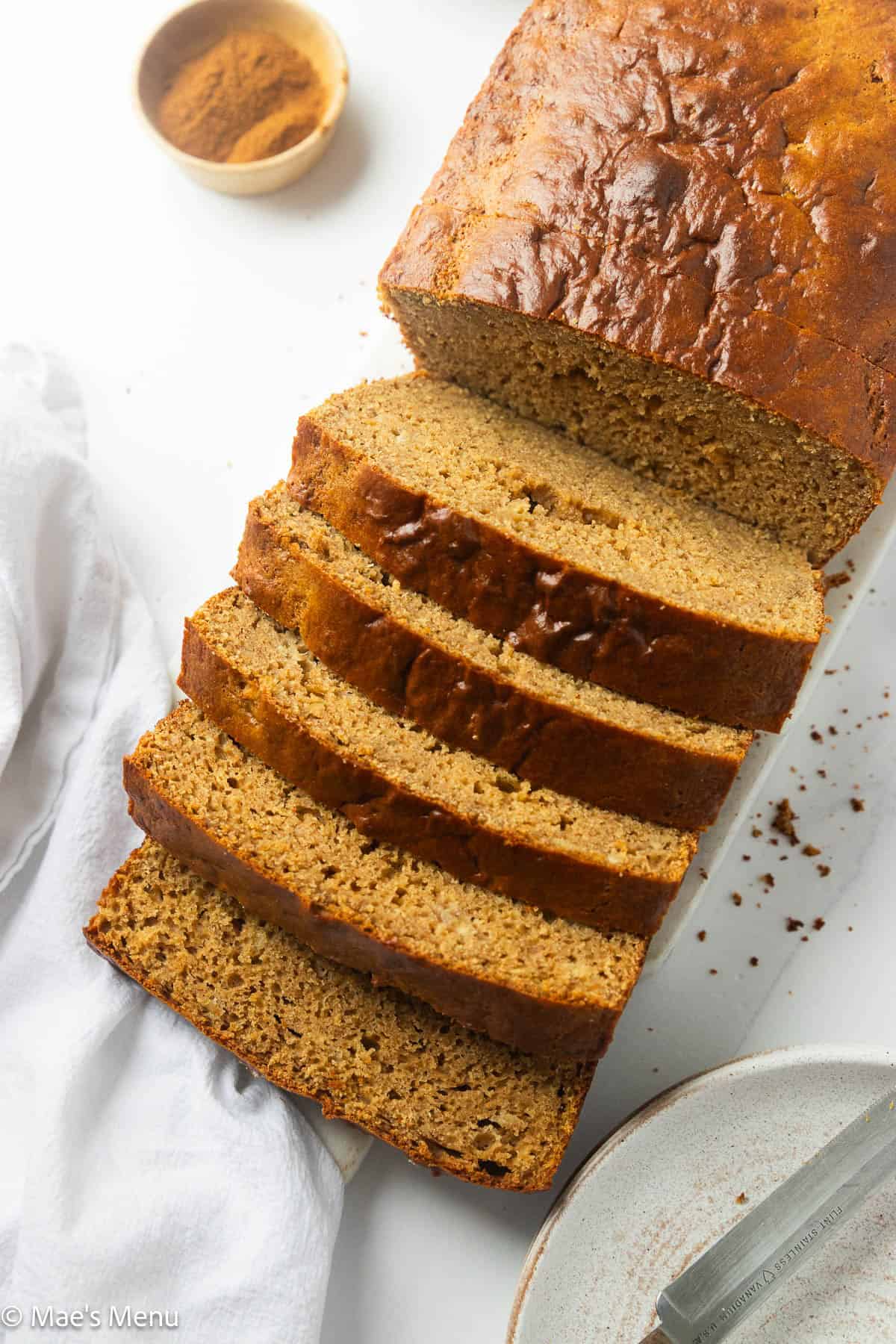
There is a reason protein banana bread keeps showing up in breakfast and meal-prep conversations: it solves a very ordinary problem. People want something that tastes like a treat, uses up overripe bananas, travels well, and gives breakfast or snack time a little more staying power.
But there is a catch. A banana bread recipe can look impressive on paper after several scoops of protein powder are added and still come out like a dry brick.
This version takes the opposite approach. Instead of trying to push the protein number as high as possible, it treats texture as part of the nutrition equation. Greek yogurt supplies moisture and protein, eggs provide structure, ripe bananas provide sweetness and moisture, and a moderate amount of whey protein raises the protein content without turning the loaf into a protein bar.
That distinction matters. Recent high-protein banana bread recipes increasingly use Greek yogurt, cottage cheese, whey, eggs, or combinations of those ingredients rather than relying on protein powder alone. :contentReference[oaicite:0]{index=0}
Why This High-Protein Banana Bread Works
The hardest part of making protein banana bread is not the banana. It is moisture management.
Traditional banana bread gets much of its soft texture from mashed bananas, eggs, flour, and fat. Protein powder changes the balance because different powders absorb liquid differently. Whey, casein, and plant-based powders are not interchangeable in a baking recipe, which is why simply replacing a large amount of flour with protein powder often produces a dense or dry loaf.
This recipe keeps the protein powder at a moderate level and lets the other ingredients do important jobs.
- Very ripe bananas provide sweetness, moisture, and concentrated banana flavor.
- Greek yogurt adds protein while helping keep the crumb soft.
- Eggs add protein, richness, and structure.
- Whey protein provides the largest concentrated protein boost.
- A small amount of oil, butter, or nut butter helps prevent the loaf from feeling dry.
- All-purpose and whole-wheat flour provide the starch and gluten structure needed for a recognizable banana-bread crumb.
The result is not supposed to taste like a protein shake baked into a loaf pan. It should taste like banana bread first and a high-protein recipe second.
How Much Protein Is Actually in a Slice?
This is where protein banana bread recipes can become misleading. The protein number depends heavily on the brand of protein powder, the type of Greek yogurt, the amount of optional nuts or peanut butter, and how many slices you cut from the loaf.
Using the ingredients below, an 8-slice loaf will generally land around 12 to 13 grams of protein per slice, although the exact number can be higher or lower depending on your ingredients.
If you cut the same loaf into 10 or 12 thinner slices, the protein per serving naturally falls. For accurate macro tracking, calculate the recipe using the nutrition label of your exact protein powder and yogurt rather than relying on a generic online estimate.
That is a more useful way to think about high-protein baking than chasing a headline number. A recipe that delivers 12 grams of protein and still tastes good is far more practical than a 20-gram slice that nobody wants to eat twice.
Ingredients for High-Protein Banana Bread
Makes: 1 standard 9x5-inch loaf
Servings: 8 thick slices or 10 to 12 smaller slices
Prep time: About 15 minutes
Bake time: About 45 to 55 minutes
Oven: 350°F (175°C)
Wet ingredients
- 3 large very ripe bananas, mashed, about 1 1/2 cups
- 3 large eggs, preferably at room temperature
- 3/4 cup plain Greek yogurt
- 1/4 cup melted coconut oil, avocado oil, or unsalted butter
- 1/4 cup honey or pure maple syrup
- 2 teaspoons pure vanilla extract
- 2 tablespoons smooth peanut butter, optional
Dry ingredients
- 1 cup all-purpose flour
- 1/2 cup whole-wheat flour
- 3/4 cup vanilla or unflavored whey protein powder, about 60 to 70 grams depending on the brand
- 1 teaspoon baking soda
- 1 teaspoon baking powder
- 1/2 teaspoon fine salt
- 1 1/2 teaspoons ground cinnamon
Optional additions
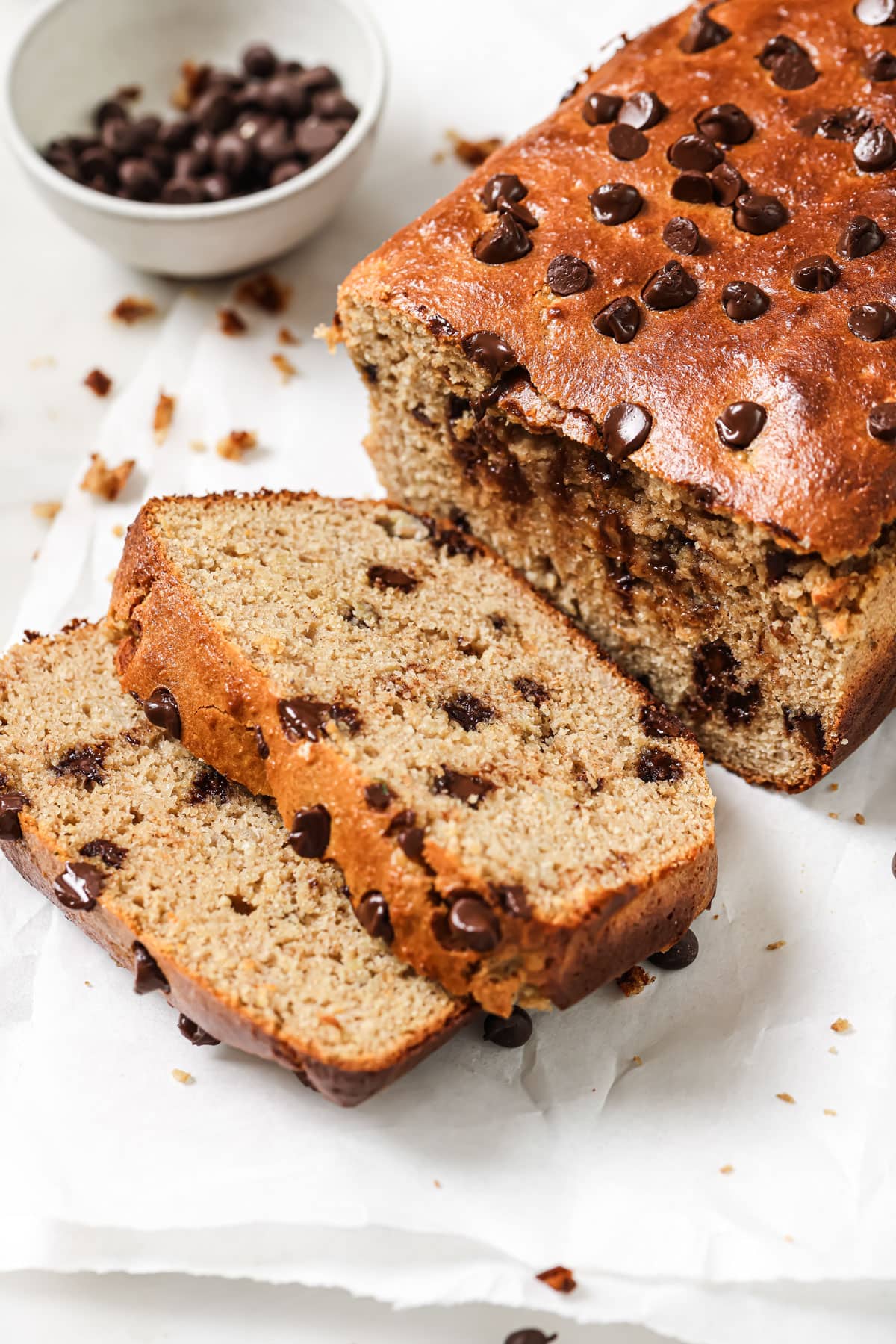
- 1/3 cup dark chocolate chips
- 1/2 cup chopped walnuts or pecans
- 1 extra banana, sliced lengthwise for the top
Which Protein Powder Is Best for Banana Bread?
Whey protein is the easiest choice for this recipe. A vanilla whey protein powder works especially well because its flavor naturally complements banana, cinnamon, and vanilla. An unflavored whey powder is useful if you want more control over sweetness.
Casein can work, but it tends to create a thicker batter and a denser finished texture. If you use casein, avoid automatically substituting it gram-for-gram without watching the batter consistency.
Plant-based protein powders can also work, but pea, rice, soy, and blended formulas vary considerably. Some absorb substantially more liquid than whey. If the batter becomes unusually stiff after mixing, a tablespoon or two of milk can bring it back to the right consistency.
The practical rule is simple: choose the protein powder you already know you enjoy drinking. A strongly flavored powder can dominate the banana, while an overly gritty powder will not magically become smooth after baking.
How Ripe Should the Bananas Be?
For this recipe, yellow bananas with a few freckles are acceptable, but heavily spotted or mostly brown bananas are better.
As bananas ripen, their texture softens and their flavor becomes noticeably sweeter and more concentrated. That matters here because the banana is doing more than providing flavor. It is also helping supply the moisture that keeps the protein-enriched crumb tender.
If your bananas are extremely ripe but you are not ready to bake, peel them, place them in a freezer-safe container or bag, and freeze them. Thaw them completely before using and pour off any unusually large amount of liquid before measuring the mashed banana.
Step-by-Step: How to Make Protein Banana Bread
1. Prepare the loaf pan
Heat your oven to 350°F (175°C). Lightly grease a 9x5-inch loaf pan and line it with parchment paper, leaving enough paper hanging over the long sides to act as handles.
This small preparation step makes the finished loaf much easier to remove without breaking the tender edges.
2. Mash the bananas
Place the bananas in a large bowl and mash them with a fork until mostly smooth.
A few small pieces are perfectly fine. You do not need to puree the bananas into a completely uniform liquid. Small pockets of banana can actually give the finished loaf a more homemade texture.
3. Mix the wet ingredients
Add the eggs, Greek yogurt, melted oil or butter, honey or maple syrup, vanilla, and peanut butter if using.
Whisk until the mixture is evenly combined. It should be thick and creamy rather than watery.
4. Mix the dry ingredients separately
In another bowl, whisk together the all-purpose flour, whole-wheat flour, protein powder, baking soda, baking powder, salt, and cinnamon.
Mixing these ingredients separately helps distribute the leavening agents throughout the flour and prevents concentrated pockets of baking soda or salt.
5. Combine the batter gently
Add the dry ingredients to the wet mixture and fold with a rubber spatula just until the flour disappears.
Do not beat the batter. Once flour is hydrated, excessive mixing can develop more gluten and make the loaf tougher. The goal is a cohesive batter, not a perfectly smooth one.
If the batter is exceptionally thick and difficult to spread, add 1 tablespoon of milk. If necessary, add another tablespoon. Protein powders differ, so batter consistency is a better guide than blindly following a cup measurement.
6. Add chocolate chips or nuts
Fold in chocolate chips or chopped walnuts if desired. Keep this step brief so you do not overwork the batter.
Transfer the mixture to the prepared loaf pan and smooth the top.
For a bakery-style finish, place a banana sliced lengthwise on top of the batter before baking.
7. Bake until the center is set
Bake for approximately 45 to 55 minutes.
Start checking toward the lower end of the range because ovens, loaf pans, banana size, and protein powders can all change the baking time.
If the top becomes deeply browned before the center is finished, loosely cover the loaf with foil for the final portion of baking.
The best test is a wooden skewer or toothpick inserted into the center. It should come out without wet batter, although a few moist crumbs are completely acceptable.
8. Let it cool before slicing
Leave the loaf in the pan for about 10 minutes, then lift it out using the parchment paper and transfer it to a wire rack.
Allow it to cool substantially before slicing.
This is especially important with protein-enriched quick breads because the interior continues to firm as it cools. Cutting a very hot loaf can make a properly baked center appear gummy.
The Most Important Trick for Moist Protein Banana Bread
If you remember only one thing from this recipe, remember this:
Do not try to get all of the protein from protein powder.
That is the shortcut that often backfires.
Greek yogurt, eggs, and bananas already contribute useful protein and moisture. Whey protein then fills the remaining gap. This approach gives you a better balance than loading the batter with several scoops of powder.
Several current protein banana bread recipes use the same broader principle, combining protein powder with Greek yogurt, cottage cheese, eggs, or other moisture-rich ingredients rather than relying entirely on powdered protein. :contentReference[oaicite:1]{index=1}
Why Does Protein Banana Bread Turn Out Dry?
There are four common reasons.
Too much protein powder
Protein powder is concentrated. Increasing it dramatically without increasing the recipe's moisture can produce a dry, chalky crumb.
The wrong protein powder
Different protein powders behave differently in baked goods. A recipe developed around whey may not behave identically when made with a highly absorbent plant or casein powder.
Not enough banana or yogurt
Protein baking needs enough moisture to compensate for the ingredients that absorb it. This is why very ripe bananas and Greek yogurt are useful here.
Overbaking
Even a well-balanced batter can become dry if it stays in the oven too long. Start checking early rather than assuming the maximum bake time is automatically necessary.
Should You Use Greek Yogurt or Cottage Cheese?
Both can work.
Greek yogurt is the simpler option because it blends directly into the wet ingredients and has a smooth texture. It also adds acidity, which works naturally in quick-bread recipes.
Cottage cheese can deliver more protein depending on the product, but it is best blended until smooth if you do not want small curds in the finished loaf.
Recipes using cottage cheese have become a particularly common variation of high-protein banana bread, including versions that skip protein powder altogether. :contentReference[oaicite:2]{index=2}
Can You Make High-Protein Banana Bread Without Protein Powder?
Yes. You do not need protein powder to make a banana bread that is higher in protein than the classic version.
Eggs, Greek yogurt, cottage cheese, skyr, nuts, seeds, and nut butter can all contribute protein. A no-powder version will usually have a lower protein ceiling, but it may have a more familiar cake-like texture.
If you remove the whey powder from this particular recipe, do not assume that replacing it with exactly the same volume of flour will produce the same result. The dry-to-wet balance changes substantially, so a no-protein-powder version is better treated as a different recipe rather than a simple substitution.
High-Protein Banana Bread Variations
Chocolate peanut butter protein banana bread
Use chocolate whey protein instead of vanilla, add 2 to 3 tablespoons of unsweetened cocoa powder, and swirl peanut butter over the batter before baking.
Cottage cheese protein banana bread
Replace the Greek yogurt with blended cottage cheese. This creates a richer, slightly denser loaf and can raise the protein content depending on the cottage cheese you choose.
Blueberry protein banana bread
Fold in about 1 cup of blueberries immediately before transferring the batter to the pan. Frozen blueberries can be used without thawing.
Walnut banana protein bread
Add 1/2 cup chopped walnuts. The nuts contribute protein, healthy fats, texture, and the classic banana-bread flavor combination.
Gluten-free protein banana bread
Use a gluten-free 1-to-1 baking flour blend designed to replace wheat flour. Because gluten-free blends differ, watch the batter consistency and allow the loaf to cool thoroughly before slicing.
Vegan protein banana bread
Use plant-based yogurt, a suitable plant protein powder, and an egg substitute such as flax eggs. Expect the texture to be somewhat different from the egg-based version.
How to Turn This Recipe Into Protein Banana Bread Muffins
This batter works well as muffins when you want individual portions for meal prep.
Line a 12-cup muffin pan and divide the batter between the cups, filling them roughly three-quarters full. Bake at 350°F (175°C) for about 18 to 22 minutes, beginning to check around 17 minutes.
Because muffin wells vary in size, use the appearance of the center and a toothpick test rather than relying on the clock alone.
Muffins also cool faster than a full loaf, which makes them convenient for freezing and packing into lunchboxes.
How to Store High-Protein Banana Bread
Once completely cool, place the banana bread in an airtight container.
- Room temperature: Best within about 2 days.
- Refrigerator: About 4 to 5 days for best quality.
- Freezer: Up to about 3 months when well wrapped.
For meal prep, slice the loaf first and freeze individual portions. Place parchment between slices if they tend to stick together.
To serve, thaw in the refrigerator or at room temperature. You can also microwave a slice briefly and then toast it for a warmer center and lightly crisp edges.
Can You Freeze Protein Banana Bread?
Yes, and sliced portions are usually the most convenient way.
Cool the loaf completely, slice it, wrap individual pieces, and place them in a freezer-safe container or bag. Label the container with the date so you know how long it has been stored.
Freezing individual slices turns the recipe into a genuine meal-prep breakfast: take one portion out whenever you need it instead of thawing the entire loaf.
What to Eat With High-Protein Banana Bread
A slice can work on its own, but pairing it with another food can turn it into a more complete breakfast.
- Greek yogurt and berries
- A glass of milk
- Fresh strawberries or blueberries
- Peanut or almond butter
- Coffee with milk
- A boiled or scrambled egg
- A small serving of cottage cheese
If your goal is simply to increase daily protein, the easiest strategy is not necessarily to keep increasing the protein content of the bread. Sometimes it is better to keep the loaf soft and enjoyable and pair one slice with Greek yogurt or another protein-rich food.
Approximate Nutrition Per Serving
Because protein powder and yogurt brands vary, nutrition should be treated as an estimate rather than a laboratory measurement.
For an 8-slice loaf, a reasonable range is approximately:
- Calories: 280 to 330
- Protein: 12 to 13 grams
- Carbohydrates: 35 to 42 grams
- Fat: 9 to 13 grams
- Fiber: 2 to 4 grams
Chocolate chips, nuts, peanut butter, the type of oil used, and the specific protein powder can move these numbers considerably. If you are tracking macros closely, calculate the complete recipe using the labels of the ingredients you actually use.
Frequently Asked Questions About High-Protein Banana Bread
Is high-protein banana bread actually healthy?
It can be a useful higher-protein breakfast or snack, but the word “healthy” depends on the rest of the recipe and your overall diet. This version provides protein along with carbohydrates and fat, and it can be more filling than traditional banana bread. It is still a baked good, not a substitute for a varied diet.
How much protein is in homemade protein banana bread?
It depends on the recipe. Many current recipes fall somewhere around 9 to 16 grams per serving, while some more aggressively formulated recipes go higher. :contentReference[oaicite:3]{index=3}
This recipe provides roughly 12 to 13 grams per thick slice when the loaf is divided into eight servings, but your exact number will depend on the brands and serving size you use.
What is the best protein powder for banana bread?
For this recipe, vanilla or unflavored whey protein is the most straightforward choice. It provides a strong protein boost without requiring the large amount of additional liquid that some other protein powders may need.
Why is my protein banana bread rubbery?
The most likely causes are too much protein powder, too little moisture, overmixing, or overbaking. Start by reducing the protein powder rather than automatically adding more flour or liquid. Also make sure the batter is folded gently once the dry ingredients are incorporated.
Can I use plant-based protein powder?
Yes. Pea, soy, rice, or blended plant proteins can work, but the result may be denser than a whey-based loaf. Check the batter before baking and add a small amount of milk or yogurt if it becomes unusually thick.
Can I use frozen bananas?
Yes. Thaw them completely before measuring. If they release a large amount of watery liquid during thawing, drain some of it so the batter does not become excessively wet.
Can I replace Greek yogurt with cottage cheese?
Yes. Blend cottage cheese until smooth before adding it if you want a uniform crumb. The substitution can increase protein depending on the brands used, but it may also make the loaf slightly denser.
Can I make protein banana bread without protein powder?
Yes. Eggs, Greek yogurt, cottage cheese, skyr, nuts, seeds, and nut butter can all raise the protein content. The final loaf will generally contain less protein than a version specifically formulated with whey or another concentrated protein source.
How do I make banana bread higher in protein without making it dry?
Use several moderate protein sources rather than adding a large amount of protein powder. Greek yogurt, eggs, cottage cheese, and a moderate amount of whey create a better balance between protein and moisture.
Why did my banana bread sink in the middle?
A sunken center can happen when the loaf is underbaked, the batter contains too much moisture, the oven temperature is inaccurate, or the loaf is disturbed before its structure has set. Use the recommended ingredient quantities, avoid opening the oven repeatedly, and make sure the center is fully baked before removing the loaf.
How do I know when protein banana bread is done?
Insert a wooden skewer or toothpick into the center. It should come out without wet batter, although a few moist crumbs are fine. The center should also look set rather than visibly liquid or glossy.
Can I make this recipe into muffins?
Yes. Divide the batter into a lined 12-cup muffin pan and bake at 350°F for roughly 18 to 22 minutes, checking early because muffin size and oven performance vary.
Is protein banana bread good for meal prep?
Yes. It is particularly convenient when sliced and frozen individually. A prepared loaf can provide several ready-to-eat breakfast or snack portions without requiring cooking every morning.
The Bigger Lesson Behind Good Protein Baking
The temptation with high-protein recipes is to treat protein as the only number that matters. But baking does not work that way.
A loaf has to manage structure, moisture, fat, sweetness, leavening, and heat at the same time. Push one ingredient too far and another part of the recipe has to compensate.
That is why the best high-protein banana bread is not necessarily the one with the biggest protein number on the nutrition panel. It is the one you can make on Sunday, slice on Monday, enjoy on Wednesday, and still genuinely want another piece.
The combination of very ripe bananas, Greek yogurt, eggs, and a moderate amount of whey gives this loaf a practical middle ground: enough protein to make it meaningfully different from traditional banana bread, but enough moisture and banana flavor to keep it recognizable as the comfort-food classic people actually came for.
Final Verdict
This is high-protein banana bread without the usual protein-baking punishment.
Use very ripe bananas. Do not overload the batter with protein powder. Keep the Greek yogurt. Mix gently. Start checking the loaf before the maximum bake time. And, perhaps most importantly, let it cool before deciding whether you got the texture right.
Once those details are under control, protein banana bread stops being a compromise recipe. It becomes what banana bread has always been at its best: a simple, comforting way to turn a few forgotten bananas into something people are genuinely happy to eat.
