
Updated for the current Betty Crocker recipe · American quick bread · Prep time: about 15 minutes · Bake time: about 1 hour
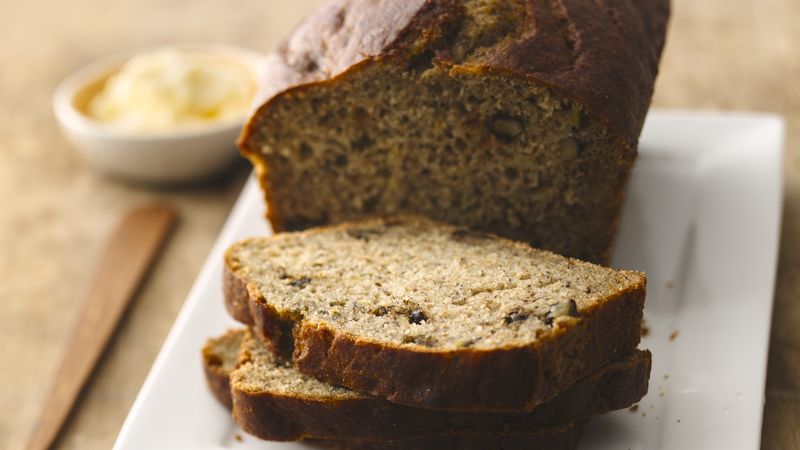
If you want the short answer, here it is: the best Betty Crocker banana nut bread starts with very ripe bananas, softened butter, buttermilk, and a light hand when the flour goes in. The current Betty Crocker classic banana bread formula makes two loaves, uses 1 1/2 cups mashed bananas, and can include chopped walnuts or other nuts. Bake until a toothpick inserted in the center comes out clean, then give the loaves time to cool before slicing.
But there is an important detail that makes this recipe more confusing than it first appears.
There are several Betty Crocker banana bread formulas online and in older recipe collections. Some use oil and Greek yogurt. Others use butter and buttermilk. Some make one loaf, while the current classic Betty Crocker recipe makes two. If you have ever compared two recipes carrying the Betty Crocker name and wondered why the ingredients do not match, you are not imagining the difference.
This guide sorts that out first, then gets into the part that matters most in a home kitchen: how to make a moist banana nut bread without ending up with a heavy, gummy center or an overbrowned crust.
Quick Answer: What Is the Betty Crocker Banana Nut Bread Recipe?
The current classic Betty Crocker banana bread recipe uses very ripe bananas, granulated sugar, softened salted butter, eggs, buttermilk, vanilla, all-purpose flour, baking soda, salt, and optional chopped nuts. The recipe makes two loaves when prepared in the standard Betty Crocker loaf pans and bakes at 350°F.
For banana nut bread, the simplest move is to use the same classic batter and fold chopped walnuts or pecans into it before baking.
- Oven: 350°F
- Bananas: 3 to 4 very ripe bananas, yielding about 1 1/2 cups mashed
- Flour: 2 1/2 cups all-purpose flour
- Butter: 1/2 cup salted butter, softened
- Buttermilk: 1/2 cup
- Nuts: 1 cup chopped nuts, if desired
- Bake time: about 1 hour, depending on pan size and oven
- Cooling: about 2 hours before slicing for the cleanest crumb
The official Betty Crocker version has a long history: Betty Crocker says its classic banana bread first appeared as a variation of a fruit loaf in the 1950 Betty Crocker's Picture Cook Book, received its own title in the 1986 edition of the Betty Crocker Cookbook, and was refined through testing before the recipe was considered perfected in 1991.
See the current Betty Crocker Banana Bread recipe for the brand's latest published formula.
Why You May See Different Betty Crocker Banana Nut Bread Recipes
This is one of the most useful things to understand before you start measuring flour.
The phrase "Betty Crocker banana nut bread recipe" does not always point to one identical ingredient list. Betty Crocker has published banana bread variations across different cookbooks, product lines, and recipe generations. Older formulas and lighter variations can use different fats, dairy ingredients, flour ratios, and quantities of banana.
That explains why one recipe may call for oil and Greek yogurt while another calls for butter and buttermilk. Both can be legitimate Betty Crocker-style formulas, but they are not interchangeable line for line.
The current classic recipe published by Betty Crocker uses butter and buttermilk and is designed to make two loaves. That is the version this guide treats as the main recipe.
My practical advice: if you are trying to recreate the familiar Betty Crocker flavor rather than simply make any banana bread, do not combine ingredients from different versions. Pick one formula and follow its proportions from beginning to end.
Ingredients for Betty Crocker Banana Nut Bread
For the current classic formula, you will need:
- 3 to 4 very ripe bananas, enough to make 1 1/2 cups mashed banana
- 1 1/4 cups granulated sugar
- 1/2 cup salted butter, softened
- 2 large eggs
- 1/2 cup buttermilk
- 1 teaspoon vanilla extract
- 2 1/2 cups all-purpose flour
- 1 teaspoon baking soda
- 1 teaspoon salt
- 1 cup chopped walnuts or pecans, if making banana nut bread
- Softened butter for serving, if desired
The ingredient list is short, but the quality and condition of a few ingredients have an outsized effect on the finished loaf.
The Most Important Ingredient Is the Banana
Forget the nuts for a moment. The banana determines much of the flavor, sweetness, moisture, and aroma of the bread.
The best bananas for banana bread are not merely yellow bananas that happen to be soft. Look for fruit with plenty of brown or black spotting and a noticeably soft texture. The fruit should smell strongly of banana and mash easily with a fork.
As bananas ripen, their starches break down and their flavor becomes sweeter and more pronounced. That is why a banana that tastes almost too soft and sweet to eat can be exactly what you want in a loaf.
If your bananas are still green or firm yellow, wait if you can. Betty Crocker recommends placing bananas in a brown paper bag for one to three days to speed ripening.
And there is one measurement rule worth remembering:
Mash the bananas first, then measure them.
Bananas vary dramatically in size. Saying "three bananas" is less precise than saying "1 1/2 cups mashed banana." Too little banana can leave the loaf dry and bland; too much can introduce enough moisture to make the center heavy or gummy.
Why Buttermilk Matters in This Banana Bread
Buttermilk is more than a liquid ingredient.
Its acidity works with baking soda to help the quick bread rise, while its tang gives the finished loaf a subtle contrast to the sweetness of the banana and sugar. It also contributes to a tender crumb.
If you do not have buttermilk, Betty Crocker suggests making a quick substitute with milk and a small amount of lemon juice or white vinegar. Plain yogurt can also work as a substitute in the classic formula.
Do not, however, treat every dairy substitution as identical. Changing the amount of liquid or acidity can alter how the baking soda behaves and can change the final texture.
How to Make Betty Crocker Banana Nut Bread Step by Step
1. Heat the Oven
Heat the oven to 350°F.
Position the oven rack so the loaf pans sit in the central baking area rather than directly against the top or bottom heating zone.
2. Prepare the Loaf Pan
Grease the bottom of the loaf pan or pans.
One of Betty Crocker's long-standing quick-bread techniques is to grease the bottom while leaving the sides ungreased. The batter can grip the sides as it rises instead of sliding down a heavily greased wall.
For the classic recipe, Betty Crocker gives two 8 1/2-by-4 1/2-inch loaf pans as the standard option. A 9-by-5-inch pan can also be used, but the depth and baking time will change.
3. Mash the Bananas
Peel the bananas and break them into pieces in a bowl. Mash with a fork or potato masher until mostly smooth.
A few small banana pieces are not a problem. In fact, I prefer a little texture rather than processing the fruit into a completely uniform puree.
Measure out 1 1/2 cups.
4. Cream the Butter and Sugar
Place the softened butter and sugar in a large bowl and beat until the mixture is fluffy and well combined.
This is one of the places where an electric hand mixer earns its keep. The goal is not simply to dissolve the sugar; you want the softened butter aerated enough to contribute to the structure and texture of the bread.
5. Add the Eggs
Add the eggs and beat until the mixture is smooth and thoroughly blended.
Scrape down the sides of the bowl so the butter and sugar mixture does not remain stuck around the edges.
6. Add Banana, Buttermilk and Vanilla
Add the mashed bananas, buttermilk, and vanilla. Mix until the wet mixture is evenly combined.
At this stage, the batter may look loose or slightly uneven. That is normal.
7. Add the Flour, Baking Soda and Salt
This is the moment to slow down.
Stir in the flour, baking soda, and salt gently with a spatula or spoon. Mix only until the dry ingredients are moistened.
Do not chase a perfectly smooth batter. A few small lumps are acceptable.
Overmixing is one of the easiest ways to turn a tender quick bread into a dense one. Once flour becomes hydrated and mixing continues, gluten development increases. Banana bread does not need the elastic structure that yeast bread needs.
8. Fold in the Nuts
Fold in about 1 cup of chopped walnuts or pecans.
Walnuts give the most traditional banana-nut profile: earthy, slightly bitter, and crunchy against the sweet banana crumb. Pecans are softer and naturally sweeter, so they create a more dessert-like result.
For stronger nut flavor, toast the nuts before chopping them. Let them cool before adding them to the batter.
9. Fill the Pan
Divide the batter between the prepared loaf pans, or use one larger pan if you are following a pan-specific variation.
Spread the top gently with a spatula.
If you want a bakery-style finish, scatter a small handful of chopped walnuts or pecans over the top before the loaf goes into the oven.
10. Bake at 350°F
Bake until the loaf is golden brown and a toothpick inserted into the center comes out clean or with only a few moist crumbs attached.
Start checking around the one-hour mark, but do not assume every oven or pan will finish at exactly the same time.
A 9-by-5-inch loaf may need a different amount of time from two smaller loaves. A dark pan can brown the exterior faster than a light-colored metal pan. An oven that runs hot can produce a dark crust before the center is ready.
If the top becomes deeply brown before the center is finished, loosely cover it with foil for the remainder of the bake.
11. Cool Before Slicing
Let the loaf cool in the pan for about 10 minutes, then carefully loosen the edges and transfer it to a wire rack.
For the cleanest slices, allow the bread to cool completely.
This is not just a patience test. Banana bread continues setting as it cools. Slice too soon and the warm center can appear wet, gummy, or fragile even when the loaf was correctly baked.
How to Tell When Banana Bread Is Actually Done
The toothpick test is useful, but banana bread deserves a slightly more careful check than a simple "toothpick clean equals done" rule.
Insert a toothpick into the center of the loaf, where the batter is thickest. If it comes out coated in wet batter, the loaf needs more time. A few moist crumbs are fine.
Look at the loaf as a whole, too:
- The top should be browned and set.
- The center should no longer look wet or liquid.
- The loaf should feel set rather than fluid when gently pressed.
- The sides should be firm and beginning to pull naturally from the pan.
- The center should not visibly wobble when the pan is moved carefully.
For an especially accurate check, an instant-read thermometer can provide additional information. A finished quick bread is generally in the neighborhood of the low- to mid-200s°F internally, although the recipe's visual and toothpick cues remain the most practical home-baking tests.
Why Your Banana Bread Turns Out Gummy
A gummy center is probably the number-one frustration with homemade banana bread.
It usually comes down to one of four things: too much banana, underbaking, overmixing, or cutting the bread while it is still hot.
The temptation to add "just one more banana" is understandable. More banana sounds like more banana flavor. But banana also brings water. The recipe is balanced around a particular amount of fruit, so adding substantially more without changing the rest of the formula can leave the center too wet to set properly.
If you want stronger banana flavor, use very ripe bananas rather than simply increasing the quantity.
Why Your Banana Bread Sank in the Middle
A sunken center usually means the loaf's structure was not strong enough to support itself when the bread finished rising.
Possible causes include:
- The center was underbaked.
- The batter contained too much moisture.
- The batter was overmixed.
- The oven door was opened too early.
- The leavening agent was old or ineffective.
- The pan was filled too deeply for the particular formula.
Do not automatically blame the baking soda. If the center is wet, bake time and moisture balance are often the more useful places to investigate first.
Why Betty Crocker Says Not to Overmix
Banana bread is a quick bread, not a yeast bread.
That distinction matters.
Yeast bread benefits from developing a strong gluten network because that network holds the gases produced during fermentation. Banana bread needs enough structure to hold its shape, but too much gluten development can make the crumb chewy and heavy.
Once the flour enters the bowl, change your mindset from "mix until smooth" to "mix until combined."
A few lumps are a better outcome than an aggressively smooth batter.
Butter vs. Oil: Which Makes Better Banana Bread?
Both work, but they create noticeably different results.
Butter contributes a richer dairy flavor and helps create the familiar classic-bakery character associated with traditional banana bread. It also contains water as well as milk fat, so its behavior in the batter is different from pure oil.
Oil tends to produce an especially moist crumb because it remains liquid after the bread cools.
If your priority is the most recognizable classic Betty Crocker-style flavor, the current butter-and-buttermilk formula is the logical choice. If your priority is maximum softness several days later, an oil-based banana bread can be appealing.
What you should not do is replace butter with oil in equal volume without considering the rest of the recipe. Different fats contain different amounts of water and behave differently during mixing and baking.
Walnuts or Pecans: Which Nuts Are Best?
Walnuts are the classic choice. Their earthy flavor and slight bitterness cut through the sweetness of ripe banana and sugar.
Pecans are a close second and arguably better if you prefer a sweeter, richer nut flavor.
Other options can work too:
- Chopped almonds for a firmer crunch
- Hazelnuts for a deeper roasted flavor
- Macadamia nuts for a richer, buttery texture
- Peanuts for a distinctly different, almost peanut-butter-like direction
For the best texture, chop nuts into pieces that are large enough to notice but small enough to distribute throughout the loaf.
Should You Toast the Nuts First?
Yes, if you have the extra few minutes.
Raw nuts will bake inside the loaf, but toasting them first drives off some surface moisture and intensifies their roasted flavor. The difference is subtle in a heavily flavored banana bread, but it becomes much more noticeable when you use a generous amount of walnuts or pecans.
Spread the nuts in a single layer and toast them briefly in a moderate oven. Watch closely because nuts can go from fragrant to burned surprisingly quickly.
Can You Make Betty Crocker Banana Bread Without Nuts?
Absolutely.
Simply leave the nuts out and you have classic banana bread.
This is also the better option if you are serving people with nut allergies. Do not assume that removing nuts from the batter makes a kitchen automatically allergy-safe, however. Cross-contact can happen through cutting boards, mixers, pans, utensils, and packaged ingredients.
Best Variations to Try
Chocolate Chip Banana Bread
Replace some or all of the nuts with chocolate chips. Semi-sweet chocolate gives the banana enough contrast without making the loaf overwhelmingly sweet.
Cinnamon Banana Nut Bread
Add a modest amount of ground cinnamon for a warmer, more aromatic loaf. A small amount of nutmeg or ginger can work too.
Pecan Banana Bread
Use toasted pecans instead of walnuts. This is especially good when served warm with butter.
Banana Bread with Dried Fruit
Dried cranberries, cherries, raisins, or chopped dates can add chewiness and concentrated fruit flavor. Because dried fruit brings additional sweetness, use it thoughtfully.
Mini Banana Nut Loaves
Divide the batter among miniature loaf pans for gifts, lunch boxes, or freezer portions. Smaller loaves bake much faster, so begin checking them well before the full-size loaf would normally be ready.
Banana Muffins
The same flavor profile works beautifully in muffins. The major adjustment is baking time: smaller portions cook much faster than a deep loaf.
A Shortcut Version: Bisquick Banana-Nut Bread
If your goal is convenience rather than reproducing the classic butter-and-buttermilk loaf, Betty Crocker also publishes a Bisquick Banana-Nut Bread formula.
That version uses very ripe bananas, sugar, milk, vegetable oil, vanilla, eggs, Bisquick Original Pancake & Baking Mix, and chopped nuts. It bakes at 350°F and is designed for a 9-by-5-by-3-inch loaf pan.
The appeal is obvious: the baking mix eliminates several individual dry ingredients and makes the recipe especially approachable when you want a homemade loaf without measuring flour, baking soda, and salt separately.
See the official Betty Crocker Bisquick Banana-Nut Bread recipe for that shortcut version.

The Older Oil-and-Greek-Yogurt Version
If you arrived here because you have an older Betty Crocker banana nut bread recipe containing Greek yogurt, vegetable oil, whole wheat flour, and about two bananas, do not throw it away.
That style of formula is useful for a different reason. Yogurt adds moisture and acidity, while oil gives the loaf a soft texture that stays moist after cooling. The whole wheat flour also creates a more substantial, slightly nutty crumb.
It should simply be treated as its own recipe rather than mixed with the current classic butter-and-buttermilk formula.
This distinction is especially important for anyone copying a recipe from an old printout, a saved webpage, a cookbook, or a family recipe card. Recipe names often survive while ingredient formulas evolve.
How to Store Betty Crocker Banana Nut Bread
Let the bread cool completely before wrapping it.
At Room Temperature
Wrap the cooled loaf tightly in plastic wrap, foil, or place it in an airtight container. Properly wrapped banana bread generally keeps well for several days at room temperature.
In the Refrigerator
Refrigeration can extend storage life, but cold air can make the crumb seem firmer and drier. If refrigerated, allow slices to come closer to room temperature before serving, or warm them briefly.
In the Freezer
Banana bread freezes very well.
You can freeze the entire loaf or divide it into individual slices. Wrap each portion securely and place it in a freezer-safe bag or container.
Individual slices are especially convenient because you can remove only what you need rather than thawing the entire loaf.
Can You Freeze Banana Nut Bread?
Yes. Banana nut bread is one of the better quick breads to freeze.
For the best result, cool the loaf completely first. Wrap it tightly to protect it from freezer air, then freeze. Thaw at room temperature or warm individual slices gently.
If you plan to freeze slices for breakfast, wrap them individually. That makes the loaf almost as convenient as a packaged snack while preserving much more of the character of homemade bread.
How to Get Cleaner, Bakery-Style Slices
There is a surprisingly simple trick: wait.
Fresh banana bread smells irresistible, but cutting it immediately after it leaves the oven is almost guaranteed to produce messy slices.
Let it cool completely and use a serrated knife with a gentle sawing motion rather than pressing straight down.
For an especially clean presentation, make the loaf a day ahead. Once the bread has rested and the crumb has settled, slices become easier to cut and the banana flavor often seems more integrated.
Common Mistakes That Ruin Banana Bread
Using Too Much Banana
More fruit does not automatically mean better banana bread. Excess banana adds moisture faster than it adds structure.
Measuring Whole Bananas Instead of Mashed Banana
Banana size varies too much for a simple count to be reliable. Measure the mashed fruit.
Using Cold Butter
If the recipe calls for softened butter, give it enough time to soften naturally. Very cold butter will not cream with sugar effectively.
Overmixing
Once the flour is added, stop as soon as the ingredients are combined.
Using the Wrong Pan
Pan dimensions affect the depth of the batter and therefore the baking time. A deeper loaf can take considerably longer to cook through than a shallower one.
Judging Doneness Only by Color
A dark golden crust does not guarantee a cooked center. Always check the middle.
Slicing Too Early
Warm banana bread can look underbaked even when it is not. Cooling is part of the baking process.
What to Do If the Top Browns Too Fast
If the crust is already deeply browned while the center remains underdone, loosely tent the loaf with aluminum foil and continue baking.
Do not wrap the loaf tightly. You want to shield the top from direct heat while allowing the interior to continue cooking.
This is especially useful with dark pans or ovens that brown baked goods aggressively from above.
Can You Use Frozen Bananas?
Yes. Frozen bananas are excellent for banana bread.
Freezing softens the fruit, so thawed bananas mash easily and can deliver excellent flavor. The main issue is excess liquid. Frozen bananas can release more moisture as they thaw.
Thaw them completely, then account for the liquid before measuring the mashed banana. The goal is to reproduce the amount of banana called for by the recipe rather than simply adding every drop of thawing liquid without consideration.
Can You Make It Without Buttermilk?
Yes.
If you do not have buttermilk, you can make a simple substitute by adding a small amount of lemon juice or white vinegar to milk and allowing it to stand briefly.
Plain yogurt can also serve as an alternative in appropriate amounts.
The important point is to preserve both the liquid and acidity the recipe expects rather than replacing buttermilk with a completely different ingredient at random.
Can You Make Betty Crocker Banana Bread Gluten-Free?
Do not simply replace the flour with an equal amount of one gluten-free flour and expect identical results.
Gluten-free flour blends vary significantly in protein, starch, fiber, and added gums. A tested gluten-free banana bread formula is a safer choice because the liquid and structure are designed around that flour blend.
If gluten-free baking is important because of celiac disease or a serious allergy, also consider cross-contact in the kitchen and verify that every packaged ingredient is appropriate for your needs.
What Does Betty Crocker Banana Nut Bread Taste Like?
The classic version is sweet but not simply sugary. The banana provides the dominant flavor, while butter adds richness and buttermilk brings a faint tang that keeps the loaf from tasting flat.
Walnuts add the contrast that makes the "nut" version work: crunchy, earthy, slightly bitter pieces against a soft and sweet crumb.
The texture sits somewhere between bread and cake. It is moist and tender, but it should still slice cleanly and hold its shape.
Why This Recipe Has Lasted for Generations
There is a reason banana bread keeps returning to American kitchens even as baking trends change.
It is forgiving in the ways that matter and precise in the ways that matter.
You do not need yeast. You do not need a long fermentation. You do not need specialty equipment. You do not even need perfect-looking bananas.
In fact, the uglier the bananas become on the counter, the more useful they can become in the recipe.
That is part of banana bread's emotional appeal. It turns a piece of fruit that looks past its prime into something warm enough to make the kitchen smell like a celebration.
And Betty Crocker's version adds something else: continuity. The recipe has been tested and revised across generations rather than being built around a passing social-media trend.
Frequently Asked Questions About Betty Crocker Banana Nut Bread
What is the current Betty Crocker banana nut bread recipe?
The current classic Betty Crocker banana bread formula uses very ripe bananas, sugar, salted butter, eggs, buttermilk, vanilla, all-purpose flour, baking soda, salt, and optional chopped nuts. The standard recipe makes two loaves and bakes at 350°F.
How many bananas do I need for Betty Crocker banana bread?
Use 3 to 4 very ripe bananas, enough to produce about 1 1/2 cups of mashed banana. Measuring the mashed banana is more accurate than relying on the number of bananas alone.
Can I use walnuts in Betty Crocker banana bread?
Yes. Chopped walnuts are a classic choice for banana nut bread. Pecans are another excellent option.
Can I leave the nuts out?
Yes. Omitting the nuts turns the recipe into classic banana bread. You can also use another mix-in, such as chocolate chips, if desired.
Why does Betty Crocker banana bread use buttermilk?
Buttermilk contributes moisture, tenderness, flavor, and acidity that works with baking soda in the quick-bread batter.
Can I substitute regular milk for buttermilk?
You can make a buttermilk substitute with milk and a small amount of lemon juice or white vinegar. Plain yogurt can also be used as an alternative in suitable proportions.
Why is my banana bread gummy in the middle?
The most common causes are underbaking, too much banana or other liquid, overmixing, or slicing the bread while it is still hot. Measure the banana accurately, mix the flour only until combined, and allow the loaf to cool completely.
Why did my banana bread sink?
A loaf can sink because the center was underbaked, the batter contained too much moisture, the batter was overmixed, or the loaf was disturbed before its structure had set.
Should I use very ripe bananas?
Yes. Brown- or black-spotted bananas generally provide the strongest banana flavor, greater sweetness, and softer texture needed for a good quick bread.
Can I freeze Betty Crocker banana nut bread?
Yes. Cool the bread completely, wrap it tightly, and freeze it whole or in individual slices. Slices are especially convenient for quick breakfasts and snacks.
How long should banana bread cool before slicing?
For the cleanest texture, let it cool completely. Betty Crocker's guidance for its classic banana bread calls for roughly two hours of cooling before slicing.
Can I make the recipe in one loaf pan?
Yes, but pan size matters. A single 9-by-5-inch loaf pan can be used for the classic recipe, but the loaf will be deeper and the baking time may be different from two smaller loaves. Check the center carefully for doneness.
Can I add chocolate chips and nuts?
Yes. Chocolate chips and nuts pair naturally with banana. Keep the total amount of mix-ins reasonable so the batter is not overloaded and the loaf can still rise properly.
Is Betty Crocker banana bread the same as banana nut bread?
The banana nut version is essentially banana bread with chopped nuts added. The exact ingredient list can vary between Betty Crocker recipe versions, so always check which formula you are following.
Why are there different Betty Crocker banana bread recipes online?
Betty Crocker has published multiple banana bread formulas and variations over the years. Older cookbooks, lighter recipes, product-based recipes, and newer online versions can therefore have different ingredients and proportions.
What is the difference between the butter version and the oil-and-yogurt version?
The butter-and-buttermilk version emphasizes classic richness and traditional flavor, while an oil-and-yogurt formula generally produces a particularly moist crumb with a slightly different flavor and texture. They should be treated as separate recipes rather than combined.
Final Verdict: Is Betty Crocker Banana Nut Bread Worth Making?
Yes—especially if you want a dependable, old-fashioned American banana bread rather than a complicated bakery project.
The real secret is not a mysterious ingredient. It is control.
Use bananas that are genuinely ripe. Measure the mashed fruit instead of guessing. Use the correct amount of liquid. Do not overmix the flour. Give the loaf enough time in the oven. And, perhaps hardest of all, let it cool before cutting.
If you do those things, the recipe becomes remarkably forgiving.
My favorite way to serve it is still the simplest: a thick slice, slightly warmed, with a little salted butter melting into the crumb. The walnuts give it enough texture to keep every bite interesting, while the banana does most of the flavor work.
And if you have a few bananas sitting on the counter that have crossed the line from "maybe tomorrow" to "I really should do something with these," this is exactly the moment banana bread was invented for.
Recipe at a Glance
| Detail | Classic Betty Crocker Banana Nut Bread |
|---|---|
| Type | Quick bread |
| Oven temperature | 350°F |
| Bananas | 3 to 4 very ripe, yielding about 1 1/2 cups mashed |
| Flour | 2 1/2 cups all-purpose flour |
| Fat | 1/2 cup softened salted butter |
| Dairy | 1/2 cup buttermilk |
| Nuts | 1 cup chopped walnuts or pecans |
| Standard yield | 2 loaves |
| Approximate baking time | About 1 hour, depending on pan and oven |
| Best doneness test | Toothpick inserted in the center comes out clean or with moist crumbs |
| Best cooling method | 10 minutes in pan, then cool completely on a wire rack |
More From Betty Crocker
For readers who want to compare variations rather than rely on a single formula, Betty Crocker's own recipe collection is the best place to explore its broader banana-bread family.
Explore Betty Crocker's recipe collection for additional tested recipes and baking ideas.
