
Published September 6, 2026 · Recipe makes 12 muffins · Prep time: 15 minutes · Bake time: 18–22 minutes · Total time: about 35 minutes
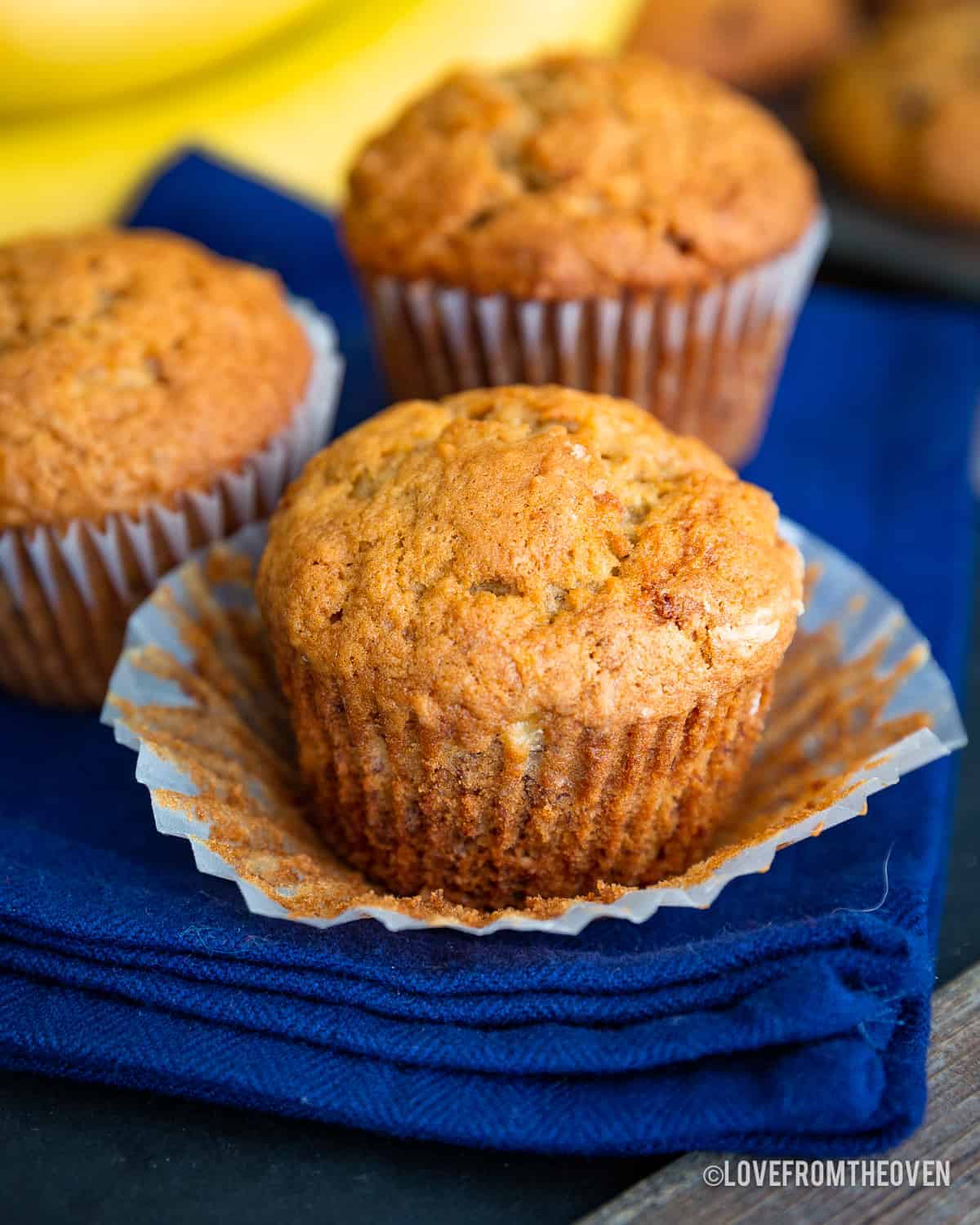
Quick answer: The secret to genuinely moist banana bread muffins is not simply adding more banana. Use very ripe bananas, measure the mashed fruit rather than relying only on banana count, keep the batter barely mixed once the flour goes in, and avoid overbaking. This version uses three very ripe bananas, brown sugar, melted butter, eggs, vanilla, and pantry staples to make 12 soft muffins with a tender crumb and concentrated banana flavor.
If you have three bananas sitting on the counter that have gone from perfectly yellow to heavily speckled and almost brown, do not throw them away. That is the moment they become especially useful for baking. Their texture is softer, their flavor is deeper, and their sweetness works beautifully in a banana muffin batter.
After testing the logic behind common banana muffin formulas, there is one practical lesson worth emphasizing: banana ripeness, batter handling, and bake time matter more than piling on extra ingredients. A complicated ingredient list cannot rescue a dry banana, an overmixed batter, or a muffin left in the oven five minutes too long.
The Best Banana Bread Muffins at a Glance
- Yield: 12 standard muffins
- Prep: 15 minutes
- Bake: 18–22 minutes
- Oven: Start at 400°F (200°C), then reduce to 350°F (175°C)
- Best bananas: Very ripe, heavily spotted bananas
- Texture: Soft, moist, tender, with lightly golden edges
- Method: Hand-mixed; no stand mixer required
- Best use: Breakfast, lunchboxes, snacks, meal prep, and freezer baking
What makes this recipe different? It treats banana muffins as their own bake rather than simply shrinking a banana bread loaf. The batter is portioned for faster, more even baking, the initial high oven temperature encourages a rounded top, and the recipe is deliberately written around the three things that most often decide the result: banana ripeness, flour measurement, and mixing time.
Ingredients for Moist Banana Bread Muffins
- 3 medium to large very ripe bananas, about 1 to 1 1/4 cups mashed
- 1 1/2 cups all-purpose flour
- 1 teaspoon baking soda
- 1/2 teaspoon baking powder
- 1/2 teaspoon salt
- 1/2 cup unsalted butter, melted and cooled slightly
- 3/4 cup packed brown sugar, light or dark
- 2 large eggs, lightly beaten
- 1 teaspoon vanilla extract
- Optional: 1 cup chocolate chips, chopped walnuts, pecans, blueberries, or another favorite mix-in
For the most predictable result, weigh the bananas after peeling if you have a kitchen scale. Banana size varies considerably, so “three bananas” can mean very different amounts of fruit. Around 1 to 1 1/4 cups of mashed banana is a useful target for this formula.
Why Very Ripe Bananas Make Better Muffins
A banana becomes softer and sweeter as it ripens because some of its starches are converted into simpler sugars. The fruit also becomes easier to mash, which helps distribute banana flavor and moisture throughout the batter.
Look for bananas covered with brown spots or fruit that has become predominantly brown on the outside. A few dark spots are good; a deeply ripe banana with a strong sweet smell is even better for baking.
Do not confuse a brown peel with spoilage. A banana can look dramatically unattractive while still being excellent for baking. However, discard bananas that show mold or have an unmistakably rotten or fermented smell.
Why Brown Sugar Belongs in Banana Muffins
Brown sugar does more than sweeten the batter. Its molasses content contributes a deeper flavor and helps the muffins retain a soft eating texture. It also complements the caramel-like notes that develop as the banana and sugar brown in the oven.
Why Melted Butter Works Here
Melted butter makes this recipe easy to mix by hand and gives the muffins a rich flavor. Because the butter is melted rather than creamed, you do not need a mixer and you are not trying to incorporate a large amount of air before adding the flour.
If your priority is maximum softness several days after baking, you can replace up to 2 tablespoons of the butter with a neutral-flavored oil. Butter brings flavor; oil stays liquid after cooling and can help preserve tenderness.
How to Make Banana Bread Muffins Step by Step
-
Heat the oven to 400°F (200°C).
Line a standard 12-cup muffin pan with paper liners or lightly grease the cups. Give the oven enough time to fully preheat before the batter is ready.
-
Mash the bananas.
Place the peeled bananas in a large mixing bowl and mash them with a fork until mostly smooth. A few small pieces are fine and can add little pockets of banana flavor.
-
Add the butter, brown sugar, eggs, and vanilla.
Stir the cooled melted butter and brown sugar into the mashed bananas. Add the eggs and vanilla and mix until the wet ingredients are evenly combined.
-
Add the dry ingredients.
Add the flour, baking soda, baking powder, and salt to the bowl. For a genuinely one-bowl method, sprinkle the leaveners and salt evenly over the flour before folding everything together.
-
Mix gently.
Use a spatula or wooden spoon and stir only until the last visible streaks of dry flour disappear. Do not keep stirring until the batter looks perfectly smooth. A slightly lumpy muffin batter is usually preferable to an overworked one.
-
Add optional mix-ins.
Fold in chocolate chips, toasted nuts, blueberries, or another filling. Reserve a small amount for the tops if you want a bakery-style appearance.
-
Fill the muffin cups.
Divide the batter evenly among the 12 cups. Aim for roughly three-quarters full. An ice cream scoop makes this step faster and keeps the muffins similar in size.
-
Create the initial rise.
Place the muffin pan in the 400°F oven, then immediately reduce the temperature to 350°F (175°C).
-
Bake for 18–22 minutes.
Begin checking around 18 minutes. A toothpick inserted into the center should come out clean or with a few moist crumbs. Wet batter means the muffins need more time.
-
Cool before storing.
Leave the muffins in the pan for about 5 minutes, then move them to a wire rack. Allowing steam to escape prevents the bottoms from becoming unnecessarily damp.

Why These Banana Muffins Stay Moist Without Becoming Gummy
“Moist” and “wet” are not the same thing. A good banana muffin should feel tender when you bite into it, but the center should still have enough structure to hold together. The balance comes from several small decisions rather than one magic ingredient.
1. Use Enough Banana, But Measure It
Bananas supply moisture, natural sweetness, flavor, and some structure. Too little banana can produce a bland, dry muffin. Too much can leave the center heavy or gummy.
That is why the recipe gives both a banana count and a mashed-volume range. If your bananas are unusually large, do not automatically use every gram simply because the recipe says three bananas.
2. Measure Flour Correctly
Too much flour is one of the easiest ways to turn a potentially tender muffin into a dry one. If measuring by volume, fluff the flour, spoon it into the measuring cup, and level the top rather than digging the cup directly into a compacted bag of flour.
A kitchen scale is even more consistent because flour weight is not affected by how tightly it has been packed into a cup.
3. Stop Mixing Earlier Than You Think
Flour contains proteins that form gluten when hydrated and worked. Gluten is essential for bread structure, but excessive gluten development is not what you want in a tender muffin.
The correct stopping point is simple: once you no longer see dry flour, stop. The batter does not need to look silky.
4. Do Not Bake Until the Muffins Are Bone-Dry
The residual heat inside a muffin continues cooking the crumb after the pan leaves the oven. Waiting for a toothpick to emerge absolutely spotless can mean waiting too long.
A few moist crumbs are generally a better signal for a tender muffin than a completely dry tester.
What the Two-Temperature Baking Method Actually Does
The high-temperature start is designed to give the batter an early push upward. As the muffins heat, gases expand and moisture turns to steam. The structure then sets as the interior cooks.
Reducing the oven to 350°F keeps the muffins cooking without exposing the tops to the full high heat for the entire bake. The result can be a more pronounced muffin top without requiring a specialized bakery oven.
This method is not magic, though. Oven calibration matters. Two ovens set to the same number can bake differently, which is why visual cues and a toothpick test should be used alongside the timer.
How to Get Taller, Bakery-Style Banana Muffin Tops
- Start with a properly preheated oven.
- Do not let mixed batter sit around while the oven heats.
- Fill the cups consistently rather than making some much smaller than others.
- Use fresh baking soda and baking powder.
- Do not overmix after adding the flour.
- Do not repeatedly open the oven door during the first part of baking.
- Use the two-temperature method described above.
There is also a less glamorous secret: consistency. A dramatic muffin top is easier to achieve when the batter has the right thickness, the cups contain similar amounts of batter, and the oven temperature is stable.
One-Bowl Banana Bread Muffin Variations
Chocolate Chip Banana Bread Muffins
Fold in about 1 cup of semi-sweet or milk chocolate chips. Reserve a few for the tops. The chocolate adds richness and turns the muffins toward dessert territory without changing the basic method.
Banana Nut Muffins
Add 1 cup of chopped walnuts or pecans. For a stronger flavor, toast the nuts briefly in a dry skillet, then let them cool before adding them to the batter.
Blueberry Banana Muffins
Fold in about 1 cup of fresh or frozen blueberries. If using frozen berries, keep them frozen until the batter is ready so they are less likely to bleed heavily into the mixture.
Cinnamon Banana Muffins
Add 1 teaspoon of ground cinnamon to the dry ingredients. For a more noticeable bakery-style finish, combine a small amount of brown sugar and cinnamon and sprinkle it over the tops before baking.
Streusel Banana Muffins
For a crisp crumb topping, rub together 3 tablespoons flour, 3 tablespoons brown sugar, 2 tablespoons cold butter, and a pinch of cinnamon until coarse crumbs form. Sprinkle lightly over the filled muffin cups before baking.
Whole-Wheat Banana Muffins
Replace up to half of the all-purpose flour with whole-wheat flour. Because whole-wheat flour absorbs more liquid and has a stronger flavor, changing the entire flour amount at once can produce a heavier muffin.
Dairy-Free Banana Muffins
Replace the melted butter with the same amount of neutral oil or melted coconut oil. Neutral oil produces the least noticeable flavor change.
Egg-Free Banana Muffins
For an egg-free variation, use an appropriate egg substitute such as a prepared flax egg or unsweetened applesauce. Expect a somewhat different crumb because eggs contribute both structure and moisture.
Gluten-Free Banana Muffins
Use a reliable 1-to-1 gluten-free baking flour formulated for muffins and cakes. If the blend already contains xanthan gum, do not automatically add more.

Common Banana Muffin Problems and the Fastest Fix
| Problem | Likely cause | What to do next time |
|---|---|---|
| Dense or rubbery muffins | Overmixing or excessive flour | Mix only until the flour disappears and measure flour carefully. |
| Gummy center | Underbaking, excessive banana, or an oven running cool | Check the center with a toothpick and verify oven temperature. |
| Dry muffins | Overbaking or too much flour | Start checking earlier and use accurate flour measurements. |
| Flat muffin tops | Cool oven, weak leavening, or batter sitting too long | Fully preheat the oven and bake soon after mixing. |
| Sunken centers | Underbaking or opening the oven too early | Allow the structure to set before checking the muffins. |
| Chocolate chips sink | Heavy mix-ins or very loose batter | Use a moderate amount and fold them in gently at the end. |
| Sticky muffin tops | Condensation during storage | Cool completely before sealing and use a paper towel to manage excess moisture. |
Can You Make Banana Muffins With Frozen Bananas?
Yes. Frozen ripe bananas are excellent for banana muffins. Thaw them completely before mixing. They may release more liquid than fresh bananas, but that liquid contains banana flavor and does not automatically need to be discarded.
The important thing is consistency. If your thawed bananas release an unusually large amount of watery liquid, drain only enough to bring the mashed banana back to the approximate amount called for in the recipe. Do not throw away flavorful banana liquid automatically.
How to Store Banana Bread Muffins
At Room Temperature
Cool the muffins completely, then keep them in an airtight container at room temperature. They are generally best within the first few days, when the crumb is at its freshest.
A sheet of paper towel inside the container can absorb excess condensation. Avoid sealing muffins while they are still warm because trapped steam can make the tops sticky.
In the Refrigerator
Refrigeration can extend storage, but cold temperatures can make baked goods feel firmer. Let refrigerated muffins sit at room temperature before eating, or warm one briefly in the microwave.
In the Freezer
Banana muffins freeze very well. Cool them completely, place them in a freezer-safe container or bag, and separate layers if necessary with parchment paper.
For best quality, use them within about three months. Thaw at room temperature or warm directly from frozen until heated through.
How to Reheat Frozen Banana Muffins
For a quick breakfast, place a frozen muffin in the microwave and heat it in short intervals until the center is warm. Let it stand for a moment before eating because the interior can become much hotter than the surface.
For a slightly drier, freshly baked texture, thaw the muffin and warm it briefly in a conventional oven or toaster oven.
How to Turn This Muffin Recipe Into Banana Bread
You can bake the same basic batter as a loaf, but the baking time changes substantially. Transfer the batter to a greased 9-by-5-inch loaf pan and bake at 350°F (175°C) until the center is fully set, generally around 55–65 minutes depending on the pan, batter depth, and oven.
If the top becomes dark before the center finishes, loosely tent the loaf with foil during the latter part of baking. Always judge doneness by the center rather than the clock alone.
How Many Bananas Do You Need for One Cup of Mashed Banana?
There is no exact banana-to-cup conversion because bananas vary in size. As a practical guide, about three medium bananas often produce roughly 1 to 1 1/4 cups of mashed banana.
For this recipe, the amount of mashed banana matters more than the number of bananas. That small distinction can make the recipe much more repeatable from one batch to the next.
Can You Reduce the Sugar?
Yes. If your bananas are extremely ripe, you can reduce the brown sugar modestly and still get a sweet muffin. However, sugar contributes more than sweetness: it also affects browning, tenderness, and moisture retention.
For that reason, reducing the sugar dramatically can change the texture as well as the flavor. If you want a less-sweet breakfast muffin, start with a modest reduction rather than removing most of the sugar.
Can You Add Protein Powder to Banana Muffins?
Yes, but moderation matters. Replacing a small portion of the flour with protein powder is less disruptive than replacing a large portion. Too much protein powder can make muffins dry, firm, or chalky.
If you experiment, start with a small substitution and adjust the liquid only if the batter becomes noticeably thicker than the original mixture.

Approximate Nutrition Per Banana Muffin
For the base recipe without chocolate chips, nuts, streusel, or other optional additions, one of 12 muffins provides approximately:
- Calories: about 210–220
- Carbohydrates: about 35–38 grams
- Protein: about 3–4 grams
- Fat: about 8–9 grams
- Sugars: about 19–21 grams
- Fiber: about 1–2 grams
These figures are estimates rather than laboratory-tested nutrition data. Banana size, flour brand, butter, sugar, and final muffin weight can all change the numbers. Chocolate chips, nuts, streusel, or other additions will increase the nutritional values.
Frequently Asked Questions About Banana Bread Muffins
What makes banana bread muffins moist?
Very ripe bananas, accurate flour measurement, enough fat, brown sugar, and careful baking all contribute to moisture. The biggest practical mistake is usually overbaking rather than a lack of ingredients.
Why are my banana muffins dense?
Overmixing is one of the most common reasons. Excess flour, underripe bananas, or insufficient leavening can also make the crumb heavy. Once the flour disappears into the batter, stop mixing.
Why did my banana muffins sink in the middle?
The most likely causes are underbaking, excessive moisture, or opening the oven before the structure has set. Make sure the center is baked through before removing the pan.
Can I use bananas that are completely brown?
Yes, provided they are not moldy or spoiled. Very brown bananas can have excellent flavor for baking because they are soft and highly ripe.
Can I use yellow bananas?
You can, but the result may be less sweet and less intensely banana-flavored. If possible, wait until the bananas have developed substantial brown spotting.
Do I have to use brown sugar?
No. White sugar can work, but brown sugar gives the muffins a deeper flavor and contributes to a softer, more moist eating texture.
Can I make banana muffins without butter?
Yes. Replace the butter with a neutral oil or another suitable dairy-free fat. The flavor and texture will change slightly, but the recipe can still produce tender muffins.
Can I make these banana muffins without eggs?
Yes. A suitable egg substitute such as a flax egg or unsweetened applesauce can work, although the muffins may be somewhat denser than the original version.
Can I make these banana muffins gluten-free?
Yes. Use a tested 1-to-1 gluten-free baking blend designed to replace wheat flour in muffins and cakes. Different blends absorb moisture differently, so the texture may not be identical to the wheat version.
Can I double the banana muffin recipe?
Yes. Double the ingredients and use two muffin pans if necessary. Avoid crowding the oven because restricted airflow can cause uneven browning and baking.
Should I use paper muffin liners?
Paper liners make cleanup easier and make the muffins easier to transport. You can also grease the pan directly if you prefer a more traditional bakery-style edge.
How full should muffin cups be?
For this recipe, filling them around three-quarters full gives a good balance between a substantial muffin and enough room for the batter to rise without overflowing.
How do I know when banana muffins are done?
Insert a toothpick into the center of a muffin. It should come out clean or with a few moist crumbs, not liquid batter. The tops should look set and lightly golden, and the center should spring back gently when pressed.
Can I freeze banana bread muffins?
Yes. Cool them completely, seal them well in a freezer-safe bag or container, and use them within about three months for the best quality.
Can I make mini banana muffins?
Yes. Use a mini muffin pan and begin checking much earlier because the smaller portions cook considerably faster than standard muffins.
Can I make jumbo banana muffins?
Yes, but jumbo muffins need a longer baking time. The center is the important part to monitor because a large muffin can look beautifully browned before it is fully baked inside.
Why did my chocolate chips sink?
Heavy mix-ins can settle in a loose batter. Use a moderate amount, fold them in at the very end, and avoid making the batter thinner than the recipe intends.
Can I use oil instead of butter?
Yes. Oil can produce a softer texture after the muffins cool because it remains liquid at room temperature. Butter provides a richer flavor, so a combination of the two can be a useful compromise.
Why are my banana muffin tops flat?
A cold oven, weak leavening, overmixed batter, or batter that sits too long before baking can all contribute. Fully preheat the oven and bake the batter promptly after mixing.
The Most Important Banana Muffin Rules to Remember
- Use very ripe bananas. Brown spots are a feature, not a problem.
- Measure the mashed banana. Banana sizes are inconsistent.
- Measure flour carefully. Too much flour quickly makes muffins dry.
- Mix as little as possible. Stop as soon as the dry flour disappears.
- Use fresh leaveners. Old baking soda or baking powder can produce disappointing lift.
- Start with a hot oven. The initial heat helps encourage a higher rise.
- Do not overbake. A few moist crumbs are better than a completely dry toothpick.
- Cool before sealing. Trapped steam can make muffin tops sticky.
Final Verdict: What Actually Makes a Great Banana Bread Muffin?
A great banana bread muffin should taste unmistakably of banana before you even start thinking about the chocolate chips, nuts, cinnamon, or topping. The crumb should be soft enough to feel moist but structured enough that it does not collapse in your hand. The top should have some color and, ideally, a gentle rise. Most importantly, the recipe should be forgiving enough to make on a normal morning with ordinary ingredients.
That is why the best approach is surprisingly simple: use bananas that are genuinely ripe, keep the flour under control, mix the batter gently, and pull the muffins from the oven when they are baked rather than when they are dried out.
Once you understand those four decisions, the recipe stops being a fixed formula and becomes a reliable base. Add chocolate for a richer breakfast treat, toasted walnuts for crunch, blueberries for a fruitier muffin, cinnamon for warmth, or nothing at all when you want the banana flavor to do all the work.
And if there is one rule worth remembering the next time three forgotten bananas turn brown on your counter, it is this: the uglier the ripe banana looks, the more useful it may be in your muffin batter.
